From Tape to Turntable: The Quiet Revolution of Jazz's Vault Producers
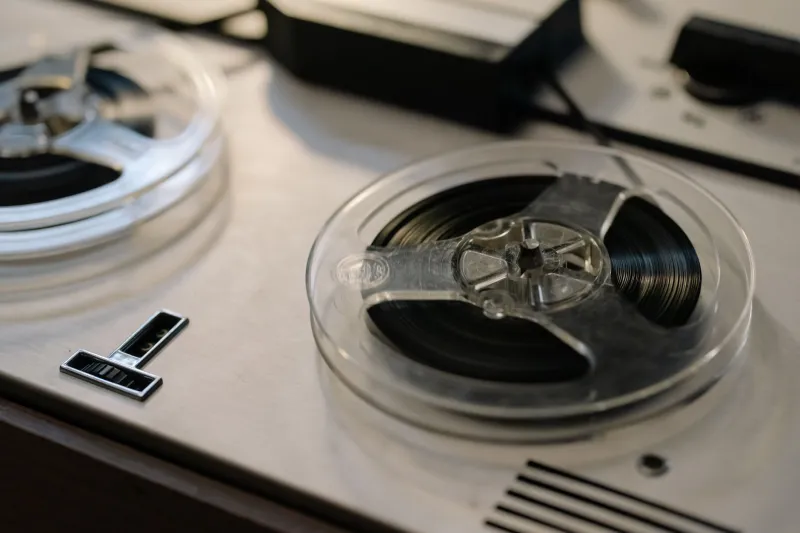
Somewhere in the temperature-controlled archives of a major American record label, a reel of two-inch tape holds a 1961 piano trio session that was never commercially released. The musicians who played it are gone. The producer who filed it away is gone. But the music—improbably, miraculously—endures, waiting for someone with the technical skill, historical curiosity, and institutional access to pull it back into the light.
This is not a rare scenario. It is, in fact, an everyday reality for a growing community of jazz producers and archivists who have made it their professional mission to excavate, restore, and contextualize recordings that history nearly swallowed whole. Their work operates at the intersection of musicology, audio engineering, and ethical stewardship—and it is reshaping the contours of jazz history in ways that scholars and listeners are only beginning to fully appreciate.
The Scope of What Remains Hidden
The sheer volume of unreleased jazz material still housed in private collections, label vaults, and university archives is staggering. Industry estimates suggest that for every commercially released jazz session from the 1940s through the 1970s, there may be two or three additional takes, alternate performances, or entirely separate recording dates that were shelved for reasons ranging from contractual disputes to simple executive indifference.
Blue Note Records, Prestige, Verve, and Columbia—the labels that defined midcentury American jazz—each accumulated enormous catalogs of unreleased material during their most productive decades. When ownership of these catalogs changed hands through corporate acquisitions, the archival infrastructure often failed to transfer with the same care as the financial assets. Tapes were boxed, mislabeled, or stored in facilities ill-suited for long-term preservation. Some were lost entirely. Others survived in conditions that required intensive restoration before they could be played back at all.
"What we're dealing with is a preservation emergency that most people outside the industry don't fully understand," says one veteran mastering engineer who has spent more than two decades working on archival jazz releases for multiple major labels. "Magnetic tape has a finite lifespan. The clock is always running."
The Technical Labyrinth
Restoring a deteriorated jazz recording is not simply a matter of digitizing an old tape and cleaning up the audio. The process is extraordinarily complex, beginning with a physical assessment of the tape itself. Acetate-based recordings from the 1940s are brittle and prone to cracking. Polyester tapes from the 1960s and 1970s can suffer from a condition known as sticky-shed syndrome, in which the magnetic coating separates from the backing—a problem that requires baking the tape at precise temperatures before it can be safely played back.
Once the tape is stabilized, engineers face a cascade of further decisions. What playback equipment best matches the original recording format? How should the stereo image, if one exists, be reconstructed? How aggressively should noise reduction be applied, and at what point does cleaning up surface noise begin to compromise the sonic character that defines the original performance?
These are not merely technical questions. They carry aesthetic and historical weight. A producer who removes too much ambient room noise from a 1955 Rudy Van Gelder session may inadvertently strip away the very acoustic texture that gave those recordings their celebrated warmth. The art of archival production lies in knowing precisely where to stop.
Ethical Terrain
Beyond the technical challenges lies a set of ethical questions that the jazz archival community continues to debate with genuine seriousness. Chief among them: should every recovered recording be released?
Musicians who recorded prolifically during the golden age sometimes left explicit instructions that certain sessions not be made public. In other cases, no such instructions exist, and the question of intent becomes genuinely murky. A pianist who recorded a tentative, exploratory session in 1963 and chose not to release it may have had reasons that were never documented. Releasing that session decades later, regardless of its musical interest, raises legitimate questions about artistic autonomy and posthumous representation.
"We have to ask ourselves whether we're serving the music or serving our own fascination with discovery," notes one prominent archivist affiliated with a major American university's jazz studies program. "Those are not always the same thing."
Estate representatives, surviving band members, and musicologists often hold differing views on these questions, and the negotiation process that precedes a significant archival release can be as complicated as the restoration work itself. The most respected producers in this field are those who treat these conversations as essential rather than procedural—who understand that the human dimension of archival work is inseparable from its historical value.
Rediscovery and the Revision of History
When an archival release is handled with genuine care, the results can be transformative. The posthumous release of previously unheard sessions has, on multiple occasions, significantly altered critical assessments of major artists. A musician long categorized within a particular stylistic tradition may reveal, through an unreleased recording, that their artistic range was considerably broader than the official discography suggested. A band thought to have dissolved acrimoniously may be revealed, through recovered session tapes, to have continued exploring new ideas well past their supposed creative peak.
These revelations matter. Jazz history, like all cultural history, is constructed from the evidence that survives and the interpretive frameworks applied to that evidence. When new evidence emerges—particularly evidence of the sonic and emotional richness that defines a live or studio performance—those frameworks must be revisited.
The rediscovery of certain recordings has also prompted reassessments of the contributions made by sidemen and lesser-celebrated figures. An unreleased session may feature a rhythm section player in an extended solo context that the official discography never captured, offering a more complete portrait of a musician whose full artistry had been obscured by the commercial priorities of the original release program.
The Community Around the Work
What makes the current moment in jazz archival production particularly significant is the emergence of a genuine community of practice around this work. Producers, engineers, scholars, and dedicated collectors are increasingly collaborating across institutional lines, sharing technical knowledge and historical context in ways that were far less common a generation ago.
Online forums, academic conferences, and the release notes of carefully produced archival albums have all contributed to a growing body of shared expertise. Small independent labels have demonstrated that there is a devoted audience for rigorously documented archival releases—listeners who want not just the music but the full historical apparatus that surrounds it: session dates, personnel lists, production notes, and the stories behind the stories.
For the jazz community, this is not merely a matter of nostalgia. It is an ongoing act of cultural stewardship—a recognition that the music's past is not fixed, that the archive is still speaking, and that the work of listening carefully is never entirely finished.
The tapes are still out there. And the people who know how to read them are still at work.