From the Vault to the Speakers: The Hidden Labor Behind Jazz's Greatest Rediscoveries
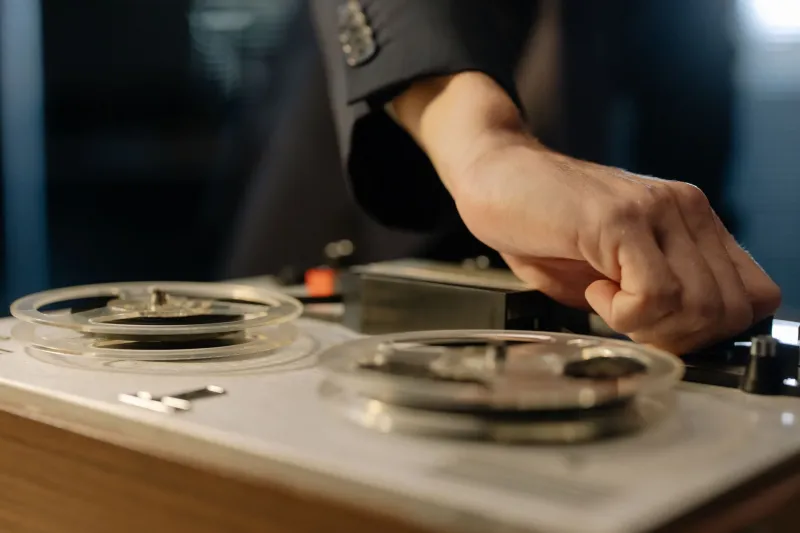
Somewhere in a climate-controlled storage facility, on a deteriorating reel of tape or a lacquer master that has not been played in four decades, there is a jazz recording that most people alive today have never heard. Whether it remains there—whether it ever crosses the distance between obscurity and the listening public—depends on a chain of decisions made by people whose names rarely appear on the final product.
The reissue business, as it exists in jazz, is one of the music's least visible and most consequential institutions. Its practitioners operate at the intersection of archival scholarship, commercial intuition, and genuine passion for music that the market had, at some earlier point, decided it did not need.
The Discovery Problem
Not all lost recordings are lost in the same way. Some exist in corporate archives that are technically accessible but practically impenetrable—vast inventories of session tapes held by the successors to labels that merged, dissolved, or were acquired decades ago. Others survive in private collections: the estates of musicians, the basements of former producers, the storage units of distributors who never quite got around to clearing them out.
Finding these recordings requires a particular combination of skills. Archivists working in the jazz reissue space tend to be part musicologist, part detective, and part diplomat. The musicology is necessary to recognize what a recording is and why it matters. The detective work locates where the physical media has ended up. The diplomacy navigates the often complicated relationships between rights holders who may have inherited ownership without inheriting any knowledge of what they own.
Label reissue coordinators who have worked in the field for decades describe the process as fundamentally relational. Trust, built over years, determines access. A label that has consistently handled archival material with care and scholarly rigor earns the confidence of estates and rights holders who might otherwise be reluctant to release anything at all.
Why This Record, Why Now
The selection process—deciding which of many possible reissues actually gets made—is where commercial instinct and cultural timing intersect most visibly. The question of why a particular forgotten session surfaces at a particular moment rarely has a single clean answer.
Sometimes the catalyst is a living musician. A contemporary pianist who has built an audience acknowledges an obscure influence in an interview, and suddenly there is a context for introducing that influence to a public that would not otherwise have sought it out. The reissue follows the conversation.
Sometimes the timing is technological. The expansion of high-resolution audio streaming has made it economically viable to release recordings that the CD era would have deemed too niche to justify manufacturing costs. A session that might have reached a few hundred listeners through a limited vinyl pressing can now find tens of thousands through a streaming platform, at a cost structure that makes the project financially defensible even without mainstream attention.
And sometimes—more often than the industry tends to admit—the timing is simply the result of one person caring enough to push. The reissue ecosystem contains a number of individuals whose advocacy for specific recordings is the proximate cause of those recordings existing in the public ear at all. These advocates may be label employees, independent producers, or music journalists whose sustained attention to a particular artist or session eventually creates the conditions for a label to act.
The Restoration Question
Once a recording has been identified and the rights situation resolved, the work of preparing it for contemporary release begins—and this phase carries its own set of consequential decisions. The question of how much to restore, and how, is one that divides practitioners and listeners alike.
Purists argue that sonic restoration should be minimal: clean the tape, address the most damaging degradation, and leave the original character of the recording intact, including its noise floor and its frequency limitations. The argument is that the sonic texture of an old recording is itself historical information—that removing it is a form of falsification.
Others contend that modern listeners are more likely to engage with a recording that meets contemporary sonic expectations, and that a reissue which alienates listeners with excessive surface noise ultimately fails the music it is meant to serve. Between these positions lies a spectrum of approaches, and the most respected reissue producers tend to be those who can articulate clearly which philosophy they are applying and why.
The Curatorial Moment
Once a reissue reaches the market, its fate depends heavily on how it is framed. Liner notes—still included in vinyl reissues and increasingly available as digital booklets—carry a weight that their length might not suggest. A well-researched, clearly written set of notes can transform a listener's experience of a recording by providing the historical and musical context that makes the music legible.
Streaming platforms add another layer of curation. A placement in an editorially maintained playlist—particularly one with a substantial following—can introduce a reissued recording to an audience orders of magnitude larger than the specialist press alone could reach. Streaming curators who focus on jazz catalog have become, in this sense, de facto participants in the reissue process, even when they have no involvement in the restoration or release itself.
The result is a system in which the survival of a forgotten recording depends not on any single decision, but on the convergence of scholarship, advocacy, timing, and luck. Most recordings that deserve to be heard remain unheard. The ones that make it back into the conversation do so because someone, at each step, refused to let them go quietly.