Sacred Ground: Inside the Intimate Jazz Spaces That Become More Than Just Venues
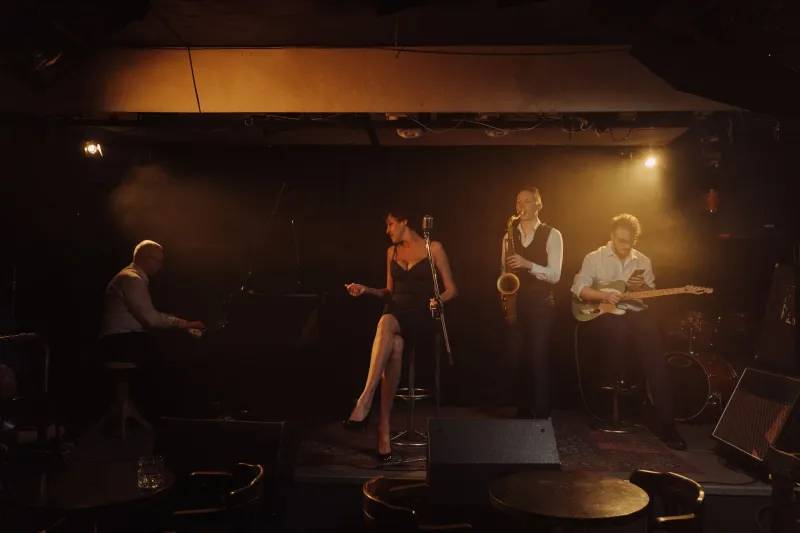
There is a particular quality of silence that descends in certain jazz rooms just before the first note sounds. It is not the silence of an empty space. It is something denser, more expectant — the silence of a congregation gathering itself before a rite it has performed many times and never quite the same way twice. Ask the musicians who have played those rooms, and they will tell you the silence itself is already music.
Across the United States, a handful of venues have accumulated this quality over decades of continuous performance, communal gathering, and the kind of sustained attention that transforms a building into a landmark of the inner life. These are not always the largest rooms, nor the most celebrated. Sometimes they are basement clubs with exposed plumbing. Sometimes they are converted sanctuaries where the pews have been replaced with café tables but the acoustics still carry a worshipful resonance. What they share is harder to quantify than square footage or seating capacity.
The Architecture of Feeling
Venue owners who have spent years cultivating these atmospheres tend to speak in language that sounds less like hospitality management and more like curation of sacred experience. The physical environment, they insist, is only the beginning.
Lighting is almost universally cited as foundational. The dimmer the room, the more completely a listener is released from the self-consciousness of being seen. Low ceilings concentrate sound in ways that create an almost physical intimacy between performer and audience. Proximity matters enormously — when a listener can see a musician's breath, can watch the tendons in a pianist's forearm shift during a particularly demanding passage, the experience moves from observation to something closer to participation.
But these are the mechanical conditions. The atmosphere that makes certain rooms feel genuinely sacred is built over time through accumulated memory, repeated ritual, and the particular community that chooses to return again and again.
"You can't manufacture it," says one longtime Chicago club owner who has operated a South Side jazz room for nearly three decades. "You can only tend it. The regulars teach the newcomers how to listen. The musicians feel that attention and they play differently. It feeds itself, if you let it."
Pilgrimage and the Devoted Listener
For serious jazz devotees, visiting certain rooms carries the deliberate weight of pilgrimage. They plan travel around it. They arrive early. They treat the experience with a reverence that would seem excessive applied to most forms of entertainment but feels entirely proportionate in context.
This is not nostalgia dressed up as spirituality. Many of the venues that command this devotion are not especially old. What they possess, rather, is an unbroken lineage of meaningful performance — a documented history of nights when something genuinely unrepeatable occurred between musicians and audience members who were paying the kind of attention that makes unrepeatable things possible.
Regular patrons at these spaces describe a phenomenon that musicians also report from the other side of the bandstand: a feeling that the room itself has expectations. That the accumulated history of performances within its walls creates a kind of invisible standard that each new night is measured against and, on the best nights, surpasses.
"I've been coming here for eleven years," says one devotee who makes the drive from Indianapolis to Cincinnati several times a year for a particular club's weekly series. "I've brought my kids. I've brought people who had never heard live jazz before and watched them understand something in forty-five minutes that I couldn't have explained to them in forty-five hours. The room does something."
When the Church Becomes a Club
Some of the most powerful jazz spaces in America are, quite literally, former houses of worship. The acoustic properties of sanctuaries — high ceilings, reflective surfaces, the particular reverb that stone and wood produce together — create sonic environments that amplify music's emotional register in ways that purpose-built clubs rarely replicate.
In New Orleans, Detroit, and Philadelphia, converted churches have become sites of genuine musical pilgrimage, their original spiritual purpose not so much abandoned as redirected. Musicians who have performed in these spaces frequently describe a heightened sense of accountability — as though the architecture itself demands that they bring their fullest selves to the bandstand.
The spiritual resonance is not incidental. Jazz has always maintained a complicated and generative relationship with American sacred music. The call-and-response structures that animate gospel, the improvisational latitude of the Black church musical tradition, the communal ecstasy that both forms seek — these are not merely historical parallels. They are living continuities. In rooms where that history is palpable in the walls, performers and listeners often report experiences that exceed the purely musical.
What Makes a Room Remember
Musicians who have played the circuit of these devotional spaces speak about them with a specificity that distinguishes them sharply from the general category of "good gig." They remember particular rooms the way they remember particular performances — not as interchangeable professional engagements but as distinct encounters with something larger than the sum of the night's parts.
Several musicians describe the phenomenon of "playing to the room" not as a metaphor but as a literal responsiveness. The acoustic properties of a beloved space, its dimensions, its surfaces, its particular way of returning sound to the performer — these become part of the instrument. Learning a room, in this sense, is as significant as learning a new horn.
The community that gathers in these spaces is equally constitutive of their character. Audiences that listen with genuine depth create a different performance environment than audiences that treat the music as background accompaniment. The best jazz rooms have cultivated, over years of consistent programming and deliberate community building, listener communities whose attention is itself a form of participation.
The Halo That Persists
What is most striking about the venues that achieve this quality is their durability. They survive economic downturns, neighborhood changes, and the turbulent economics of the live music industry because the communities they have built treat their preservation as something closer to civic obligation than consumer preference.
When these rooms are threatened — by rising rents, by the retirement of a founding owner, by the indifferent pressures of urban development — the response from their communities tends to be fierce and organized in ways that the closure of an ordinary entertainment venue rarely provokes.
That response is, itself, testament to what these spaces have become. They are not simply places where jazz is performed. They are locations where something essential about the music — its capacity for genuine communion, its refusal of passivity, its insistence on the unrepeatable present moment — becomes available in its fullest form.
The halo, once established, does not easily lift. It lingers in the memory of everyone who has sat in those chairs, in the dimness, in the expectant silence before the first note. It lingers long enough to bring them back.


