Original Pressing or Spotify Queue? Jazz Collectors Wrestle With What Authenticity Really Means
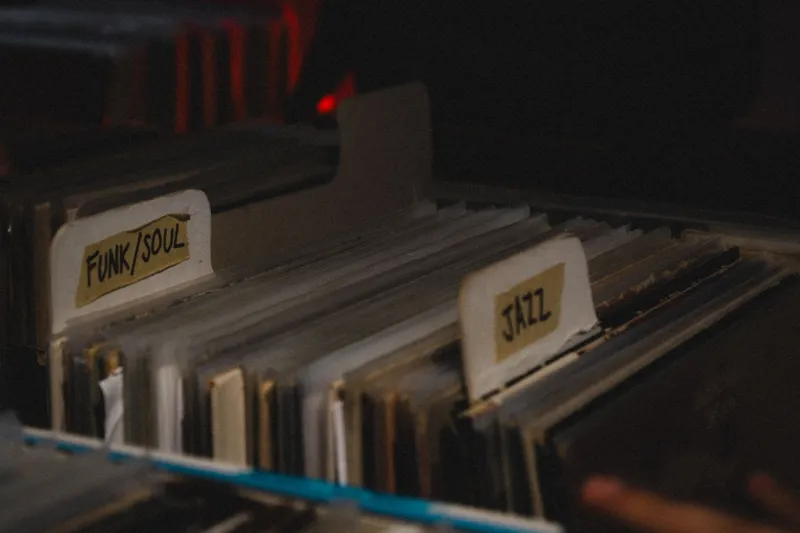
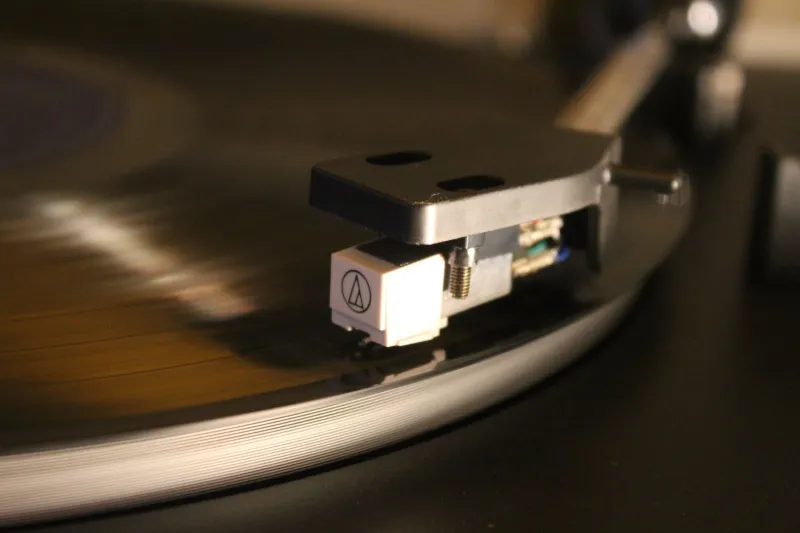
There is a particular ritual familiar to serious jazz collectors. A worn sleeve is extracted from a milk crate. The record within—a Blue Note original from 1959, perhaps, or a Prestige ten-inch from the early part of that decade—is lifted with practiced reverence, held toward the light, inspected for hairline scratches. The needle drops. And then, beneath the music, comes the surface noise: a soft, persistent crackle that many listeners consider not a flaw but a feature, a kind of sonic fingerprint confirming that what fills the room is the real thing.
That ritual, and the philosophy embedded within it, is under considerable pressure in 2024. Streaming platforms now carry virtually the entire recorded canon of jazz history. Remastered vinyl reissues—some of them meticulously produced, others of debatable quality—line the shelves of independent record shops from Portland to Philadelphia. The question that once animated only a narrow circle of audiophiles has migrated into the broader jazz community: what does it actually mean to listen to a jazz record authentically?
The Collector's Hierarchy
For a certain category of listener, the answer is unambiguous. Original pressings—records manufactured as close as possible to the original recording sessions, pressed on the equipment of the era, distributed before the master tapes had been duplicated and re-duplicated into generational degradation—represent the only honest encounter with the music. This position is not merely sentimental. It rests on a coherent argument about signal chains, lacquer quality, and the irreversible loss of sonic information that accumulates each time a master tape is copied.
"Every generation removed from the original master costs you something," says Daniel Weir, who has operated Sidecar Records in Chicago's Logan Square neighborhood for nearly two decades. "When you're listening to a first pressing of a Rudy Van Gelder session, you're hearing something closer to what Van Gelder intended. The dynamic range, the placement of the instruments in the room—it's all still there. Reissues, even very good ones, are approximations."
Weir is careful to distinguish between categories of reissue. He speaks with genuine admiration for certain high-fidelity labels that have invested heavily in analog remastering from original vault tapes, including some recent productions from Acoustic Sounds and Music Matters Jazz. "Those are serious efforts," he acknowledges. "But they're still not the same thing. And the collector who tells you otherwise is rationalizing the price."
The Archivist's Counterargument
Not everyone in the preservation community shares Weir's hierarchy. Patricia Hollis, a music archivist who has worked with university library collections in the Southeast, offers a more complicated picture. The assumption that original pressings represent some pure, unmediated access to artistic intent, she argues, ignores the realities of mid-century manufacturing.
"People romanticize original pressings, and I understand why," Hollis says. "But the quality control at pressing plants in the 1950s and 1960s was inconsistent. You could buy two copies of the same original pressing and get meaningfully different listening experiences. The idea that there is one authentic sonic object attached to any given album is a myth—a beautiful myth, but a myth."
Hollis points to recent archival projects in which engineers working from properly stored master tapes have produced transfers that, by measurable acoustic standards, outperform many original pressings. "If your goal is to hear what was captured in the studio that day," she says, "a careful modern transfer from a pristine tape may get you closer than a well-worn original pressed from a third-generation lacquer."
Streaming's Uncomfortable Legitimacy
The conversation grows more unsettled when streaming enters the frame. Among dedicated collectors, platforms such as Spotify, Apple Music, and Tidal occupy an awkward position: they are dismissed as artistically inadequate and yet consulted constantly, often as reference points or discovery tools. The cognitive dissonance is rarely resolved cleanly.
Younger listeners who have come to jazz through streaming—a demographic that jazz educators and venue owners increasingly regard as the genre's most promising new constituency—tend to be unmoved by the original-pressing argument. For them, access and convenience carry their own legitimacy. Marcus Chen, a 26-year-old musician based in Seattle who has been playing tenor saxophone for six years, describes discovering Coltrane's A Love Supreme through a playlist algorithm. "I didn't know what I was supposed to be listening on," he says. "I just knew it changed something in me. Does the format really change what the music does to you?"
It is a question that serious collectors find genuinely difficult to dismiss, even when they disagree with its implied conclusion.
What Collectors Actually Prioritize
Surveys of collector communities—conducted through online forums, record fair conversations, and the informal ethnography of any well-attended jazz listening session—suggest that the values driving acquisition decisions are rarely reducible to sound quality alone. Provenance matters: knowing that a record passed through specific hands, was purchased at a specific shop, carries a specific story. Tactility matters: the weight of the sleeve, the typography of the label, the sensation of physical ownership. And era-appropriate listening experience matters in a way that is almost impossible to quantify but deeply felt.
"I'm not just buying the sound," says Renata Okonkwo, a collector and jazz radio host in Washington, D.C. "I'm buying a relationship with the period. When I put on my original pressing of Kind of Blue, I'm aware that I'm holding an object that existed when Miles was alive, when those musicians were alive. That awareness changes the listening experience. It makes it more serious."
Okonkwo is not dismissive of streaming, however. She uses it regularly for discovery and for sharing music with listeners who are new to the genre. "The halo around an original pressing doesn't mean streaming has no value," she says. "It means they're doing different things. The mistake is conflating them."
A Living Debate With No Final Answer
What the jazz collector's dilemma ultimately reveals is something characteristic of the music itself: a productive tension between preservation and evolution, between honoring the past and remaining open to the present. The genre has always negotiated between tradition and transformation. Its listeners, it turns out, are doing the same.
Record stores, streaming queues, archival transfers, and lovingly maintained original pressings are not competing answers to a single question. They are responses to different questions about what music is for—questions that devoted listeners have always been asking, in one form or another, since the first jazz recordings were pressed onto shellac nearly a century ago.
The needle drops. The music begins. And somewhere in the space between the crackle and the melody, the debate continues.