Pass It On: How Jazz Mentors Are Keeping the Oral Tradition Breathing in a Digital World
Long before conservatory curricula and music theory textbooks, jazz was transmitted through a sacred, informal chain — one musician listening intently to another, absorbing phrasing, timing, and attitude that no written score could capture. That chain has never broken, but today it stretches across fiber-optic cables, Discord servers, and late-night video calls as much as it does across the bandstand. The apprenticeship, it turns out, never truly ends.
The Original Classroom Had No Walls
To understand where jazz mentorship stands today, one must first appreciate what it looked like at its foundation. In the Kansas City of the 1930s, young musicians would linger outside clubs well past midnight, waiting for the chance to sit in with established players. In Harlem, aspiring pianists memorized the stride vocabulary of James P. Johnson and Fats Waller not from sheet music but from proximity — standing close enough to watch the keys, close enough to feel the air move when the music did.
This pedagogy of immersion was not incidental to jazz's development; it was the mechanism by which the music reproduced itself. Charlie Parker learned by slowing down records and playing along until the phrasing became instinct. Miles Davis absorbed bebop by sitting beside Charlie Parker on the bandstand night after night, decoding the logic of improvisation in real time. The lesson was never stated outright. It was demonstrated, absorbed, and eventually transformed.
That model — call it the apprenticeship of proximity — defined jazz education for decades before formal degree programs entered the picture. And while university jazz programs have produced remarkable players, many of today's most celebrated mentors insist that something irreplaceable still lives in the informal, unstructured exchange between master and student.
Passing the Torch in the Twenty-First Century
For saxophonist and educator Donald Harrison Jr., who came of age studying under Art Blakey in the Jazz Messengers, the obligation to transmit what he received is not philosophical — it is personal. "Art didn't just teach you how to play," Harrison has noted in various interviews. "He taught you how to be a musician. How to carry yourself. How to listen. You can't put that in a syllabus."
Harrison, based in New Orleans, continues to mentor younger players through a combination of live performance, private instruction, and community programming. His approach mirrors the Blakey model: place emerging artists in real performance situations alongside seasoned players and let the pressure of the bandstand do its teaching. The feedback is immediate, unfiltered, and — according to those who have experienced it — profoundly more instructive than any classroom exercise.
This philosophy finds resonance across the country. In Chicago, the AACM (Association for the Advancement of Creative Musicians), now more than five decades old, continues to function as a collective mentorship organism, where experienced members guide newer ones through both musical and institutional knowledge. In New York, organizations such as Jazz at Lincoln Center and Smalls Jazz Club have long cultivated informal mentorship pipelines alongside their public programming.
When the Zoom Call Becomes the Jam Session
The COVID-19 pandemic, for all its devastation, forced jazz mentorship to confront a question it had been quietly avoiding: could the oral tradition survive without the room?
The answer, it appears, is a qualified yes — with significant caveats.
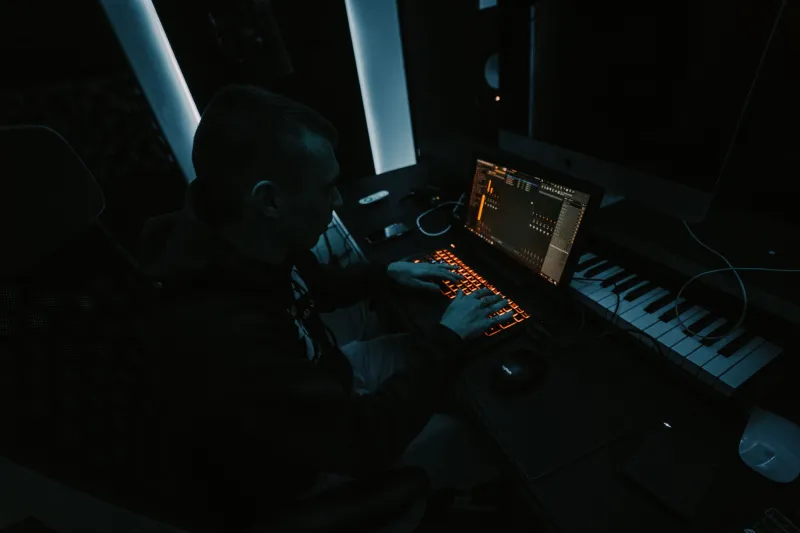
Many established players pivoted to online platforms with surprising agility. Masterclasses that once required cross-country travel became accessible to a student in rural Oklahoma or a young saxophonist in suburban Atlanta who could never have afforded a trip to New York. Discord servers dedicated to jazz improvisation began hosting listening sessions, transcription workshops, and real-time feedback threads that mimicked, in digital form, the after-hours conversations that once took place in dressing rooms and diners.
Trumpeter Ambrose Akinmusire, whose lyrical approach has made him one of the most distinctive voices in contemporary jazz, has spoken openly about using video platforms to maintain mentorship relationships during the pandemic years. The technology, he has observed, strips away some of the ambient information that in-person playing provides — the physical energy of a room, the subtle cues exchanged between musicians — but it preserves the dialogue. And dialogue, in jazz, is everything.
TikTok and Instagram Reels have introduced an unexpected dimension to this conversation. Short-form video has become, for certain educators, a vehicle for transmitting musical concepts to audiences who might never have sought out a formal lesson. Clips demonstrating the logic of a ii-V-I progression, or breaking down a Coltrane substitution in thirty seconds, have accumulated millions of views. Critics within the jazz community occasionally raise concerns about depth — whether a concept that took years to internalize can meaningfully be conveyed in under a minute. Proponents counter that the goal is not substitution but invitation: if a fifteen-second clip sends one listener down a rabbit hole that ends with them transcribing a Sonny Rollins solo at two in the morning, the tradition has been served.
What the Technology Cannot Replace
For all the ingenuity with which jazz mentors have adapted to digital platforms, a consensus persists among veteran players: certain things cannot be transmitted through a screen.
The feel of a rhythm section locking in behind a soloist — what musicians sometimes call "the pocket" — is a physical phenomenon as much as a musical one. The micro-adjustments that players make in response to each other, the slight rush of a phrase or the deliberate drag behind the beat, are communicated through means that a compressed audio stream cannot fully replicate. Learning to navigate that environment, to hold one's ground while simultaneously yielding to the collective, requires physical presence.
Equally irreplaceable is what might be called the mentorship of character. Jazz has always demanded more than technical facility; it demands a particular kind of courage — the willingness to commit fully to a musical idea in real time, in public, without a safety net. That courage is, in part, learned by watching someone else model it. It is absorbed in the green room before the performance, in the post-gig debrief over coffee, in the quiet moments when a mentor says something that the student will not fully understand for another decade.
The Halo Passes Forward
What is striking about the current moment in jazz mentorship is not the tension between old methods and new platforms, but the way in which dedicated educators are refusing to treat that tension as a contradiction. The most effective mentors today operate across multiple registers simultaneously — teaching privately, performing publicly, posting online, and preserving the informal spaces where the deepest transmission still occurs.
The oral tradition in jazz was never simply about sound. It was about relationship: the specific, irreducible bond between someone who has lived inside the music for decades and someone who is only beginning to understand what that life entails. That bond does not require a particular medium. It requires commitment, attention, and time.
In that sense, the apprenticeship model that carried jazz from New Orleans to Kansas City to New York to the world is not merely surviving the digital age. It is finding new surfaces on which to leave its mark — and new ears, in every corner of the country, waiting to receive it.