No Label, No Limits: How Independent Jazz Artists Are Building Empires One Stream at a Time
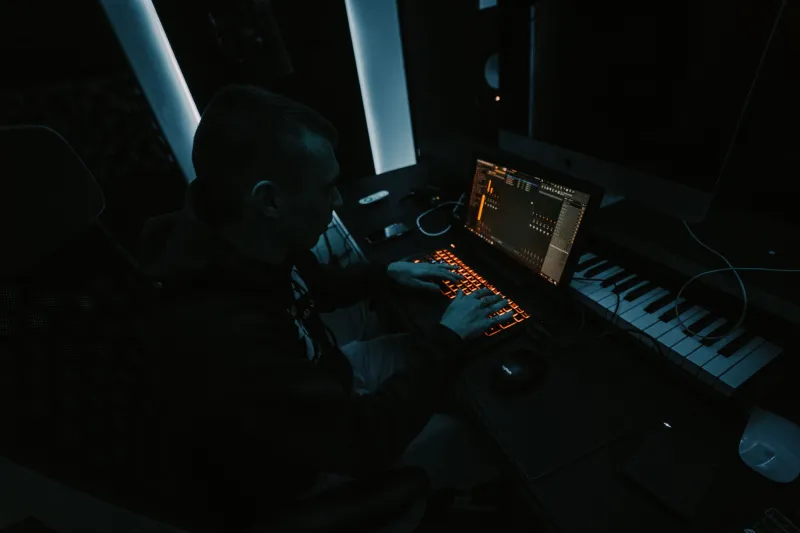
In the spring of 2021, pianist and composer Yemi Adeyemi released a forty-seven-minute album of original compositions from a converted spare bedroom in her apartment in Philadelphia. She had no publicist, no distribution deal, and no advance from a record label. What she had was a Bandcamp page, a modest but intensely engaged following she had cultivated through years of YouTube uploads, and an album she believed in completely. Within six weeks, the record had earned her more direct revenue than the two label-affiliated projects she had contributed to earlier in her career — combined.
"The math changed," Adeyemi says simply. "And once you see the new math, it's very difficult to go back."
Adeyemi's experience is no longer anomalous. Across the United States, a growing cohort of jazz musicians is dismantling the traditional industry infrastructure piece by piece, replacing it with a patchwork of digital platforms, direct-to-fan relationships, and creative autonomy that would have been structurally impossible a decade ago. This is not a fringe phenomenon. It is, increasingly, the dominant reality for working jazz artists in America.
The Economics of Independence
To understand why so many musicians are choosing this path, it helps to understand what the traditional path typically looked like. A label deal — even a favorable one — historically meant surrendering a significant portion of recording rights, submitting to marketing decisions made by people who may never have seen the artist perform live, and waiting months or years for royalty statements that often revealed earnings far below initial expectations. For jazz, a genre operating in a commercially narrower lane than pop or hip-hop, the economics were frequently punishing.
Bandcamp's revenue model altered the fundamental calculus. The platform returns approximately 82 percent of sales revenue directly to artists — a figure that renders the traditional label split almost comically unfavorable by comparison. For an independent jazz release with a devoted niche audience, even modest sales numbers can translate into meaningful income. Bandcamp Fridays, a promotional initiative the platform introduced during the COVID-19 pandemic that temporarily waived its own transaction fees, became a genuine cultural event within the jazz community, with artists reporting single-day sales that rivaled the annual royalties they had received from label work.
YouTube operates on a different model — advertising revenue rather than direct sales — but its value to independent jazz musicians lies less in per-stream income than in audience development. Artists who post consistently, whether full performances, studio sessions, or informal practice videos, build subscriber bases that translate into ticket buyers, Bandcamp purchasers, and Patreon supporters. The platform functions, for many, as a long-form advertisement for everything else they do.
Profiles in Self-Determination
Trombonist and arranger Deshawn Lattimore built his following through a YouTube series documenting the composition of an entire big band album in real time. Over the course of eighteen months, he uploaded videos showing everything from initial melodic sketches to the logistical challenge of recording sixteen musicians in a rented studio space in Detroit. The transparency was deliberate.
"People want to know how music gets made," Lattimore explains. "When you pull back the curtain, you're not diminishing the magic — you're deepening it. Viewers became invested in the project before a single note was officially released. By the time the album dropped on Bandcamp, there was already a community waiting for it."
The album sold over two thousand copies in its first month, a figure that would be considered modest by mainstream industry standards but represents substantial success for an independent jazz release. More importantly, Lattimore retained full ownership of the master recordings — an asset whose long-term value he is acutely aware of.
In Brooklyn, saxophonist and bandleader Claudette Ferreira has taken a different approach, using the subscription platform Patreon to create a tiered community of supporters who receive early access to recordings, video lessons, and occasional live-streamed performances. The model provides predictable monthly income — a rarity in a performance-dependent career — and has allowed Ferreira to plan and execute recording projects without financial anxiety.
"I used to spend enormous mental energy worrying about money," she says. "That energy is now going into the music. The work is better. I can hear it."
Algorithms, Discovery, and the Double-Edged Sword
The platforms that have empowered independent jazz artists are not, of course, neutral infrastructure. They are commercial entities with their own incentive structures, and the algorithms that govern content discovery can be as constraining as they are enabling.
Spotify's algorithmic playlist system, for instance, has proven a mixed blessing for jazz. The platform's editorial playlists — Jazz Classics, Late Night Jazz, Jazz Vibes — draw millions of listeners, but their curatorial logic tends to favor familiar names and accessible sounds over challenging or experimental work. Independent artists who do not fit neatly into the platform's genre categorizations often find their music surfacing irregularly or not at all.
"The algorithm wants to know what box you're in," says Adeyemi. "Jazz has never been comfortable in a box. That tension is real and it hasn't gone away just because the distribution model changed."
Some artists have responded by gaming the categorization system strategically — tagging releases with adjacent genre descriptors, releasing shorter tracks designed for playlist inclusion, or deliberately titling albums with search-friendly language. Others have rejected that approach entirely, treating Spotify as a secondary platform and concentrating their energy on the more artist-controlled environments of Bandcamp and direct mailing lists.
What This Means for Jazz's Future
The DIY streaming revolution carries implications that extend well beyond individual artist economics. It is gradually reshaping what gets recorded, who records it, and how jazz listeners discover new music.
Without label gatekeepers determining which projects are commercially viable, the range of music reaching audiences has expanded considerably. Long-form suites, unconventional instrumentation, deeply regional sounds that would have been considered unmarketable by a national label — all of it is now finding its audience, however small, through the connective tissue of the internet.
There is a historical resonance here worth acknowledging. Jazz has always been, at its core, a music of self-determination. From the musicians who pressed their own 78s in the 1920s to the artists of the loft jazz movement in 1970s New York who staged performances in raw industrial spaces to escape commercial gatekeeping, the tradition of building outside the establishment is not new. What is new is the scale and accessibility of the tools available.
The bedroom studio that Yemi Adeyemi records in is, in its own way, a direct descendant of those loft stages — a space claimed by an artist who decided that the terms being offered by the existing system were not acceptable, and that the music was worth more than the system was willing to pay for it.
The halo of jazz, it turns out, can glow just as brightly without a label's name attached to it.