Last Call, First Note: The Legendary Late-Night Clubs Keeping Jazz Alive After Dark
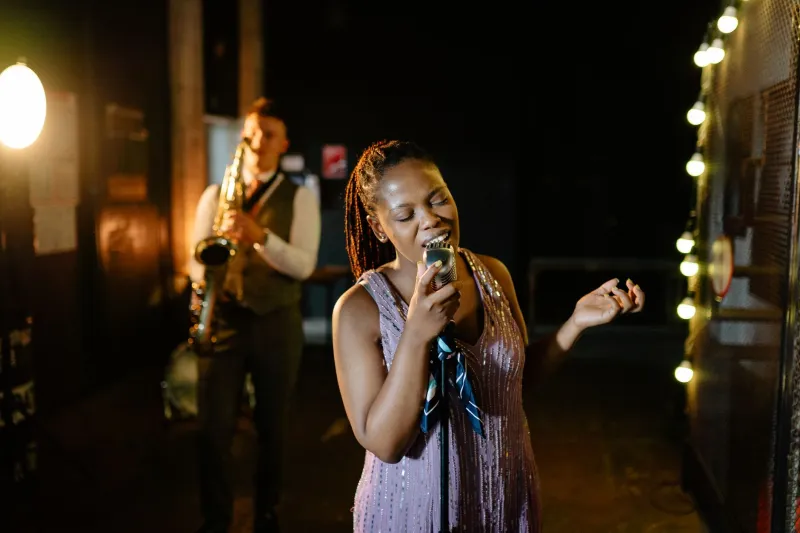
The hour is approaching midnight on a Tuesday in lower Manhattan. Outside, the city conducts its ordinary business — delivery trucks, late commuters, the ambient percussion of a metropolis that never quite sleeps. Inside the Village Vanguard, however, time operates differently. The low ceiling absorbs sound in a way that seems almost deliberate. A bassist is mid-phrase, and the room is holding its breath.
This is the experience that no streaming service has yet found a way to commodify: the particular electricity of live jazz in a room built for exactly that purpose, at exactly that hour, with exactly that quality of collective attention.
Rooms That History Built
The Village Vanguard, situated in a basement on Seventh Avenue South in Greenwich Village, opened in 1935 under the proprietorship of Max Gordon and has operated continuously ever since. It is, by any reasonable measure, the most historically significant jazz club in the United States. The recordings made on its modest stage — John Coltrane's Live at the Village Vanguard, Bill Evans' Sunday at the Village Vanguard, Sonny Rollins' A Night at the Village Vanguard — constitute a substantial portion of the jazz canon.
Lorraine Gordon, who assumed stewardship of the club following her husband's death in 1989, ran the room with fierce independence until her own passing in 2018. The club is now managed by Deborah Gordon, who has maintained her mother's exacting standards. The Vanguard books a single act per week, Monday through Saturday, with sets beginning at 8:00 and 10:30 p.m. There is no kitchen, no elaborate cocktail menu, and no concession to the entertainment complex aesthetic that has consumed much of New York's nightlife. The music is the point.
"The Vanguard doesn't apologize for being what it is," says longtime patron and jazz educator Ronald Chambers of Brooklyn. "You go in there and you understand immediately that you are in a place where something serious is happening."
New Orleans: The Street That Never Stops
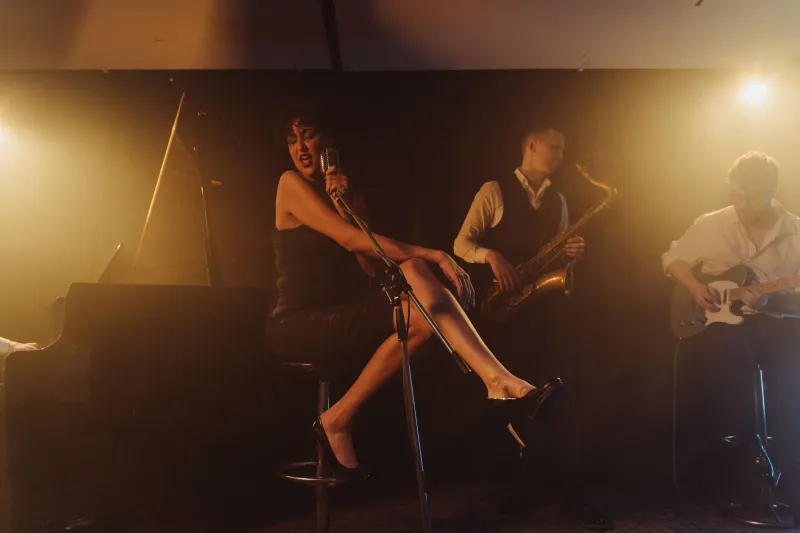
If the Village Vanguard represents jazz's institutional gravity, Frenchmen Street in New Orleans' Faubourg Marigny neighborhood represents its living, breathing spontaneity. On any given evening — and the evenings tend to begin late and end later — the street offers a corridor of sound: brass bands, piano trios, organ combos, and the occasional soloist performing with the particular authority that comes from knowing a room intimately.
The Spotted Cat Music Club, a narrow room with walls covered in vintage photographs and a bandstand barely large enough for a quartet, has become one of the most beloved venues on Frenchmen Street since opening in 1995. There is no cover charge. Tips sustain the musicians. The bar is straightforward. What the Spotted Cat offers instead of amenities is frequency: live music seven nights a week, with multiple sets per evening, featuring a rotating cast of New Orleans-based artists who represent the city's extraordinary depth of talent.
The Maison, a larger venue a few doors down, provides a complementary experience — multiple rooms, multiple bands performing simultaneously, a format that allows patrons to drift between sounds and discover unexpected pairings. On a busy Friday night, the street itself becomes the venue, with listeners spilling onto the sidewalk and music pouring from every open door.
The Pandemic and Its Reckoning
The COVID-19 pandemic imposed a catastrophic interruption on this world. Jazz clubs, which depend on close physical proximity, shared air, and the economies of nightly door and bar revenue, were among the first businesses shuttered and among the last permitted to reopen. The consequences were severe.
The Jazz Showcase in Chicago, one of the oldest and most respected clubs in the Midwest, suspended operations for an extended period and faced genuine uncertainty about its future. Birdland in New York — named in honor of Charlie Parker and operating since 1949 in various locations — went dark for months, as did the Blue Note, Dizzy's Club at Jazz at Lincoln Center, and dozens of smaller rooms across the country.
Some did not survive. Cornelia Street Café, a Greenwich Village institution that had hosted jazz performances for decades, announced its permanent closure in 2020, citing a combination of pandemic losses and a lease it could no longer sustain. The loss was mourned widely within the community as emblematic of the precarity facing smaller venues even before the pandemic had formally receded.
Yet the closures were not universal. The Village Vanguard, operating with the financial stability that its history and endowment afford, resumed programming and returned to full capacity as health restrictions permitted. Preservation Hall in New Orleans — a nonprofit institution as much as a commercial venue — similarly weathered the disruption and returned to nightly performances. The Jazz Showcase reopened under the continued leadership of the Koransky family. Birdland came back.
The Musicians Who Make the Room
No examination of these venues is complete without attention to the house musicians and regular performers whose residencies define the character of a room. The Vanguard Jazz Orchestra, a seventeen-piece big band that has performed every Monday night at the Village Vanguard since 1966, is perhaps the most extraordinary example of this continuity. Founded by Thad Jones and Mel Lewis, the orchestra has outlasted both its founders and continued to develop its own identity across more than five decades of weekly performances.
In New Orleans, figures such as pianist Tom McDermott and trumpeter Leroy Jones have become institutional presences on Frenchmen Street, their regular appearances drawing both local devotees and visiting listeners who have specifically sought them out. These artists are not merely performers filling a calendar slot — they are custodians of a living tradition, transmitting vocabulary and sensibility through nightly practice.
For younger musicians, the late-night club remains an irreplaceable conservatory. The informal education that occurs when a twenty-two-year-old bassist sits in with an experienced quartet at 1:00 a.m. cannot be replicated in a classroom or approximated through recorded study. The club is where the music is actually learned.
Why These Spaces Cannot Be Replaced
In an era when digital tools can simulate nearly any listening environment and deliver recorded performances of extraordinary quality, the persistence of the jazz club demands explanation. The answer, ultimately, is phenomenological: the experience of being in a room where improvised music is being created in real time, in response to the specific energy of that specific audience on that specific evening, is categorically different from any reproduction.
Jazz, more than virtually any other musical tradition, is a music of the present tense. Its meaning is generated in the moment of performance, through the interaction of musicians who are simultaneously composing and executing, listening and responding. A recording captures a trace of that process. The room contains the process itself.
The clubs that have endured — through economic cycles, urban transformation, and the disruptions of a pandemic — endure because they provide something genuinely irreplaceable. They are, in the truest sense, where jazz lives.