Passing the Torch by Hand: How One-on-One Mentorship Is Quietly Shaping Jazz's Next Masters
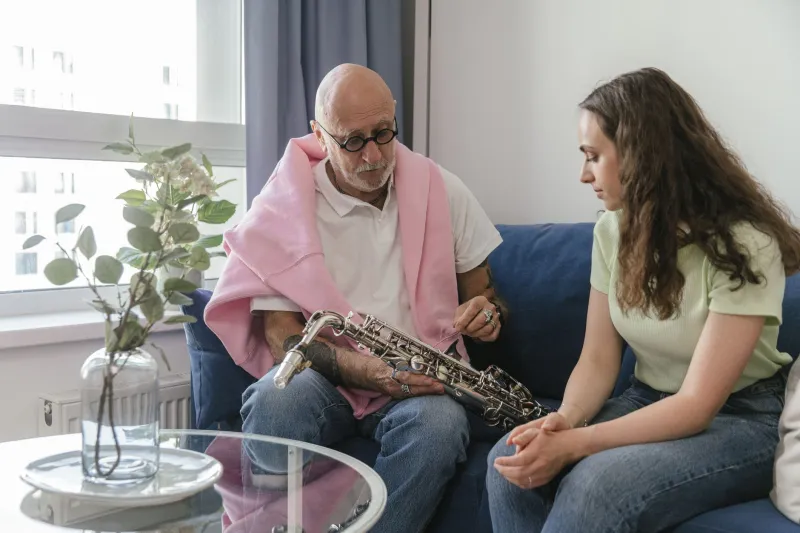
There is a particular kind of knowledge that no syllabus can contain. It lives in the pause before a phrase, in the way a veteran pianist adjusts the weight of a chord mid-performance, in the unspoken vocabulary that passes between musicians who have spent real time together. For much of jazz's first century, this knowledge traveled from one generation to the next not through lecture halls or conservatory curricula, but through proximity — through apprenticeship in its most elemental form.
That tradition, long regarded as the music's original pedagogical backbone, is experiencing a quiet but unmistakable resurgence across the United States. As formal jazz education programs face budget pressures, faculty reductions, and enrollment declines at institutions ranging from small liberal arts colleges to major research universities, a growing number of established artists are stepping into the breach — offering their time, their ears, and their hard-won experience directly to the musicians who will carry the music forward.
The Room Where It Happens
For Marcus Whitfield, a twenty-six-year-old tenor saxophonist from Detroit, the turning point came not in a classroom but in the cramped back office of a jazz club on the South Side of Chicago, where a veteran bandleader spent forty-five minutes walking him through the harmonic architecture of a single Coltrane ballad. "He wasn't teaching me the notes," Whitfield recalls. "He was teaching me why the notes mattered. That's something I couldn't have gotten from a textbook."
This is the texture of contemporary jazz mentorship: informal, unhurried, deeply personal. It unfolds in rehearsal rooms and green rooms, over coffee after late sets, and in the kind of extended jam sessions where the clock becomes irrelevant. The structure is loose by design. Unlike a university course with defined learning outcomes and assessment rubrics, the apprenticeship model adapts to the specific needs, instincts, and gaps of the individual student — and to the particular enthusiasms of the teacher.
Eleanor Voss, a sixty-one-year-old vibraphonist based in Philadelphia who has mentored more than a dozen younger musicians over the past two decades, describes the relationship in almost curatorial terms. "You're not just teaching someone to play," she says. "You're helping them understand what they're a part of. The history, the arguments, the failures, the breakthroughs — all of it. A classroom can introduce those things. A mentorship makes them real."
What Formal Education Cannot Replicate
The decline of institutional jazz programs has been well documented. Across the country, universities have reduced faculty positions, consolidated departments, and in some cases eliminated jazz studies entirely. The pressures are familiar: declining enrollment in the humanities and arts, administrative prioritization of vocational programs, and the broader financial strains afflicting higher education. The consequences for aspiring jazz musicians have been significant.
Yet practitioners within the mentorship tradition are careful not to frame their work as simply a stopgap response to institutional failure. Many argue that the apprenticeship model was always superior for certain kinds of musical development — that formal education, for all its genuine virtues, imposes constraints that can inadvertently calcify a student's thinking.
"Universities are excellent at teaching you what jazz was," observes Raymond Okafor, a fifty-three-year-old bassist and composer who has maintained a roster of mentees throughout his performing career. "They're less equipped to help you figure out what jazz is becoming — or what it could be. That's the conversation I'm trying to have with the musicians I work with."
Okafor's point touches on a tension that has animated jazz pedagogy for decades: the relationship between tradition and innovation. The music's history is inseparable from its capacity to absorb, transform, and transcend its own conventions. Mentorship, its advocates suggest, is uniquely suited to holding both imperatives simultaneously — honoring the lineage while refusing to be imprisoned by it.
The Mutual Nature of the Exchange
What strikes many observers of contemporary jazz mentorship is how consistently both parties describe the relationship as reciprocal. Established artists speak of being invigorated by their mentees' perspectives, of having their own assumptions productively challenged, of rediscovering aspects of the music they had long taken for granted.
Diana Hsu, a thirty-year-old pianist from San Francisco currently studying with a veteran bandleader she met through a mutual acquaintance at a festival in New Orleans, describes the dynamic with precision. "He teaches me how to listen," she says. "And I think I remind him why the music still surprises people. We're both getting something we couldn't get anywhere else."
This mutuality is, in some respects, historically continuous. The great mentorship lineages in jazz — from the relationships that produced bebop's founding generation to the associations that gave rise to the avant-garde movements of the 1960s — were rarely straightforwardly hierarchical. They were conversations, sometimes contentious ones, between people who cared deeply about the same questions.
Preserving the Oral Tradition
Beyond its pedagogical dimensions, the revival of mentorship carries a particular cultural weight. Jazz has always been, at its core, an oral and aural tradition — a music that transmits its deepest meanings through listening and imitation as much as through notation or theory. The apprenticeship model is the institutional form best suited to sustaining that dimension of the music's identity.
Voss puts it plainly: "There are things I know about this music that I learned by sitting next to someone who had sat next to someone who had sat next to someone who was there at the beginning. That chain of transmission is precious. If it breaks, something irreplaceable is lost."
Programs designed to formalize this informal tradition have begun to emerge in several American cities. Organizations in Chicago, New York, and Los Angeles have developed structured mentorship initiatives that pair emerging artists with established figures, providing modest stipends and performance opportunities while preserving the flexibility that makes the model effective. These efforts represent an acknowledgment, from within the jazz community itself, that the apprenticeship tradition requires active stewardship.
The Halo Effect
What mentorship ultimately produces, beyond technical proficiency and historical literacy, is a sense of belonging — an understanding that one is part of something larger and more enduring than any individual career. For musicians navigating an industry that offers few easy paths, that sense of connection carries real sustenance.
"When someone who has played this music for thirty years takes the time to sit with you and really listen," Whitfield says, "it changes the way you hear yourself. It changes what you think is possible."
The torch, it turns out, is not simply passed. It is held, briefly, by two sets of hands at once — the experienced and the emerging, the keeper and the inheritor — before it moves forward into the dark. In that shared moment of illumination, something essential about jazz continues to travel, note by unwritten note, from one generation to the next.