Thirty Seconds at a Time: How Short-Form Video Is Bringing a New Generation Into the Jazz Conversation
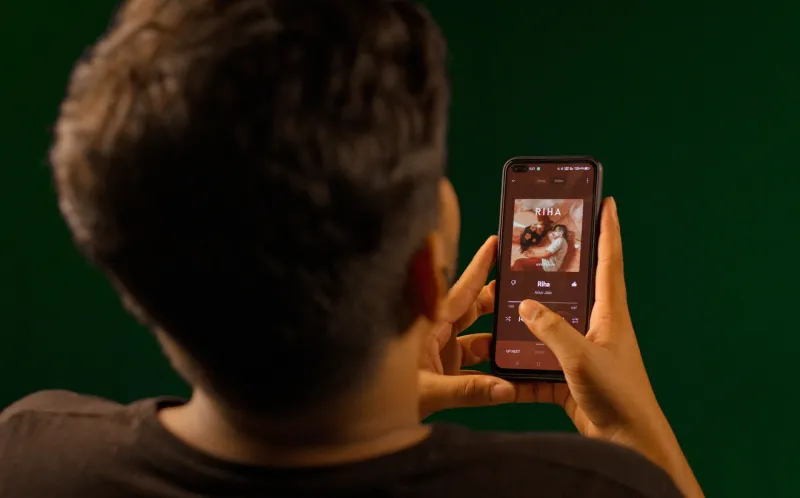
In the spring of 2022, a clip of pianist Hiromi Uehara performing a solo passage circulated widely on TikTok. The video had not been posted by a record label or a publicist. It had been uploaded by an anonymous account dedicated to sharing what its creator described simply as "music that hits different." Within seventy-two hours, it had accumulated several million views. The comment section filled with variations on a single theme: I didn't know jazz could sound like this.
For those who have spent decades inside the jazz world, that sentence carries a complicated resonance. Jazz has always sounded like this—and like a thousand other things simultaneously. But for a generation whose primary musical discovery mechanism is an algorithm trained on engagement metrics, the encounter with Hiromi's velocity and precision was, for many, genuinely revelatory. And it arrived not through a record store, a radio program, or a college music appreciation course, but through a social media feed curated by software.
This is the paradox at the center of jazz's relationship with Gen Z: a deeply traditional art form is finding new audiences through the most ephemeral of contemporary media, and no one is entirely certain what to make of it.
The Viral Anatomy of a Jazz Moment
Not all jazz translates equally to short-form video. The music that tends to perform well on platforms like TikTok and Instagram Reels shares certain characteristics: virtuosic passages that register visually as well as aurally, moments of apparent spontaneity that read as authentic rather than rehearsed, and an emotional directness that communicates across the initial barrier of unfamiliarity.
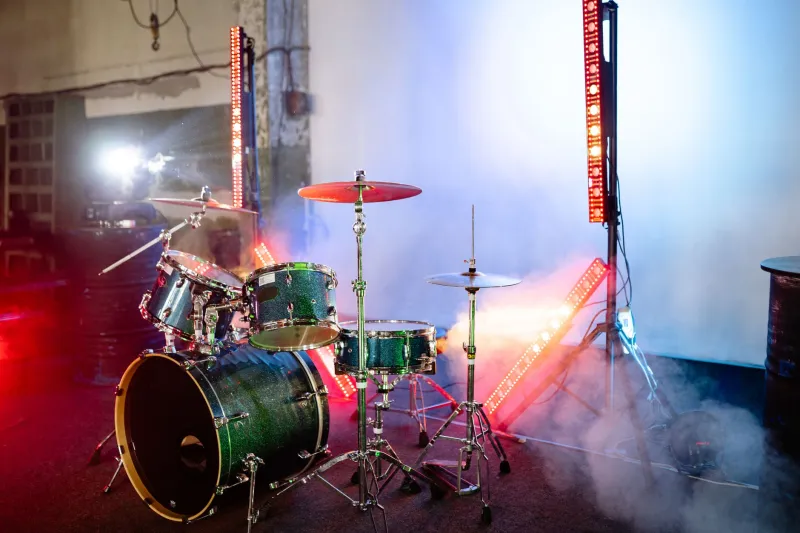
Drummers have fared particularly well in this environment. The visual spectacle of a technically accomplished player navigating a complex pattern offers immediate gratification to viewers who may have no prior framework for evaluating what they are watching. Accounts dedicated to jazz drumming—some affiliated with professional musicians, others operated by enthusiastic fans—have accumulated subscriber bases in the hundreds of thousands. Nate Smith, whose work spans jazz, funk, and contemporary soul, has developed a substantial social media presence that appears to have meaningfully expanded his audience beyond the traditional jazz listenership.
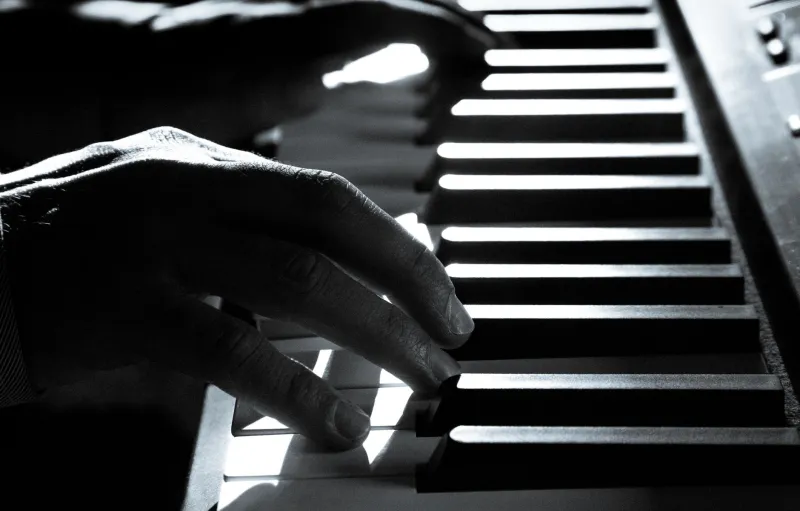
Guitarists and pianists have similarly found traction when their playing contains what one might call a visual argument—a moment where the relationship between physical gesture and sonic result is apparent enough to be compelling even on a small screen with mediocre speakers.
The Creators Doing the Work
Beyond the musicians themselves, a layer of content creators has emerged as an unexpected intermediary between jazz and Gen Z audiences. These are not jazz journalists in any traditional sense. They are enthusiasts—often younger, often self-taught in their musical knowledge—who have developed genuine followings by contextualizing jazz for audiences with no prior exposure.
Some operate as explainers, breaking down harmonic concepts or historical context in formats calibrated for short attention spans. Others function more as curators, assembling clips and recordings around themes—"jazz songs for studying," "jazz that sounds like a rainy afternoon," "jazz that goes hard"—that speak to emotional states rather than genre categories. The latter approach is particularly notable because it reframes jazz not as a historically bounded tradition but as a mood, a texture, a sonic environment.
This reframing is simultaneously one of the most effective recruitment tools jazz has encountered in years and one of the most contentious points of debate within the community.
The Authenticity Question
Long-time jazz aficionados watching these developments have responded with a mixture of genuine enthusiasm and carefully expressed concern. The enthusiasm is easy to understand: any mechanism that directs new ears toward the music is, at a basic level, welcome. The concern is more nuanced.
When jazz circulates on social media primarily as background texture—as "lo-fi jazz" playlists or as the sonic equivalent of a Parisian café aesthetic—it risks being appreciated for qualities that are largely incidental to what makes the music significant. The harmonic sophistication of a Miles Davis modal composition, the rhythmic conversation embedded in a Coltrane quartet performance, the compositional architecture of a Duke Ellington arrangement: these dimensions of the music are not easily perceptible in a thirty-second clip consumed on a phone speaker while scrolling through a feed.
There is also the matter of decontextualization. Jazz emerged from specific historical circumstances, specific communities, specific struggles. A Gen Z listener who discovers the music through an algorithmically served clip may receive none of that context—and may not immediately seek it out. The music arrives as sensation rather than as culture.
"I think about it like a doorway," offered one New York-based jazz educator who has observed these trends closely. "Social media can be a doorway. But a doorway is not the room. The question is whether people walk through."
Signs of Genuine Engagement
There is meaningful evidence that some do. Younger musicians who cite social media as their initial point of contact with jazz are appearing with increasing frequency in conservatory programs, at jam sessions, and at live performances. Artists like Cory Henry, whose gospel-inflected keyboard work has circulated extensively on video platforms, report encountering fans at shows who discovered them through clips rather than through conventional music media. Jazz record sales on vinyl—themselves a subject of considerable interest in this community—have shown particular strength among younger buyers, suggesting that algorithmic discovery sometimes translates into sustained engagement.
Several jazz clubs in major American cities have reported upticks in younger attendance that they attribute, at least in part, to social media visibility. When a venue is tagged consistently in content that reaches Gen Z audiences, it acquires a cultural relevance that advertising budgets alone cannot purchase.
What the Music Asks of Its New Listeners
Jazz has always demanded something from its audience. Not exclusivity, not credentials, but a willingness to sit with complexity, to follow a musical conversation whose resolution may be deferred or deliberately withheld, to develop over time an ear capable of hearing what is happening beneath and between the notes. That demand does not diminish because the initial encounter occurred on a phone screen.
The most optimistic reading of jazz's social media moment is that it represents a genuine expansion of the community—an invitation extended through unexpected channels to people who might never have wandered into a club or picked up an album on their own initiative. The most cautious reading is that surface-level viral engagement rarely translates into the deep listening that the music ultimately requires.
Both readings are probably correct. The thirty-second clip is not the music. But for a generation navigating an overwhelming sonic landscape, it may be exactly the right length for a first introduction—provided the conversation does not end there.