One Record, A Thousand Doors: The Albums That Rewrote a Jazz Musician's Story
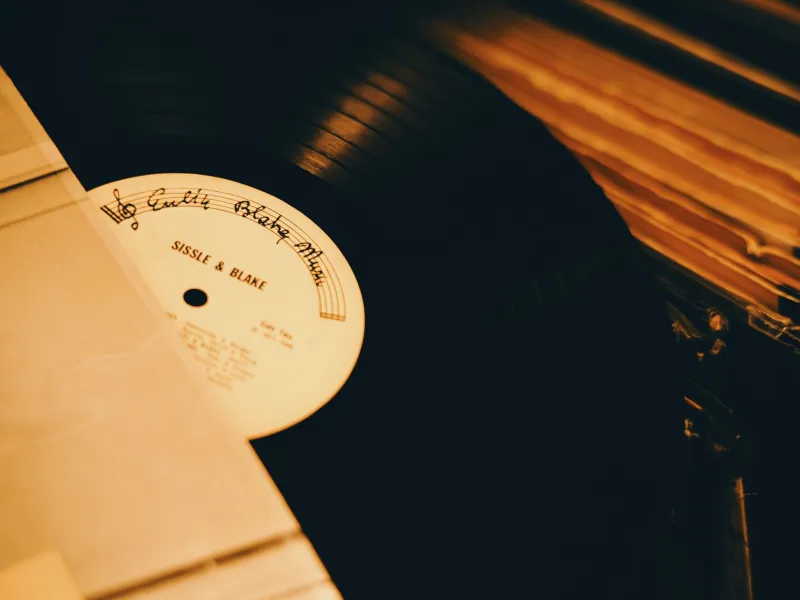
There is a peculiar alchemy at work when a jazz musician's career suddenly pivots on a single recording. Colleagues who had long admired the work from a respectful distance begin citing the name in interviews. Critics who had previously filed the artist under "promising" now reach for superlatives. Listeners who had never heard a note from the catalog find themselves ordering back issues from independent retailers and streaming sessions recorded a decade prior. The album itself may not always be the artist's finest hour — but it is, without question, the moment the world decided to pay attention.
This phenomenon, sometimes called the halo effect in commercial psychology, operates with particular force in jazz, where careers are long, catalogs are deep, and the distance between genuine artistry and widespread recognition can span entire decades. Understanding how certain albums create this kind of gravitational pull — and what happens to the musician on the other side of it — reveals something fundamental about how jazz culture processes and distributes its own history.
The Record That Turns the Room
Pianist Andrew Hill spent the better part of the 1960s recording for Blue Note with an intensity and harmonic originality that left many listeners admiring from a careful distance. His 1964 album Point of Departure was a masterwork of controlled dissonance, featuring a cast that included Eric Dolphy and Kenny Dorham. Yet for years, Hill remained a figure revered within a specific circle of jazz devotees rather than a household name even within the broader jazz community. It was not until critical reassessments in the late 1990s and early 2000s — driven in part by reissue campaigns and renewed academic interest in post-bop iconoclasm — that Point of Departure assumed its current stature as essential listening. Almost immediately, Hill's entire discography underwent reappraisal. Albums that had been quietly out of print were suddenly in demand.
Hill's experience illustrates a pattern that repeats across jazz history with striking consistency. The breakthrough record does not simply add to a musician's reputation — it reorganizes it entirely, functioning as a kind of interpretive lens through which all prior work is re-examined.
Timing, Collaborators, and the Machinery of Recognition
What separates a record that breaks through from one that does not is rarely a matter of pure artistic quality. The musicians who experienced these turning points are often candid about the role that circumstance played. The right producer at the right label, a guest appearance from a figure whose name carries cultural weight, a release date that coincides with a broader moment of public curiosity about the music — these factors can be as decisive as anything that happens in the studio.
Tenor saxophonist Joe Lovano spent years building a reputation as one of the most resourceful improvisers in post-bop circles before his 1991 Blue Note debut Landmarks introduced him to a significantly wider audience. The album's lineup, the production clarity, and the timing of its release — arriving as acoustic jazz was enjoying a period of renewed commercial attention — combined to create conditions that his earlier work, however accomplished, had not encountered. In subsequent years, listeners who discovered Lovano through Landmarks frequently traced backward through his sideman recordings and earlier sessions, finding an artist whose voice had been fully formed long before the wider world had registered it.
This retroactive discovery is itself one of the most compelling features of the halo effect. The breakthrough album does not create the musician's artistry — it simply makes that artistry legible to a broader audience, and in doing so, it reframes everything that preceded it.
The Weight of a Single Moment
For the musicians themselves, the experience of a breakthrough album can be disorienting as much as it is gratifying. Several artists who have lived through this transition describe a complicated relationship with the record responsible. There is gratitude, certainly, but also a quiet awareness that the critical and commercial machinery now attaching itself to their name had been absent during years of serious, unacknowledged work.
Guitarist Kurt Rosenwinkel, whose 2001 album The Enemies of Energy on Verve served as a commercial and critical inflection point, has spoken in interviews about the way recognition reshapes an artist's sense of their own history. The records made before the breakthrough take on a different character — not because the music changed, but because the context surrounding it shifted. What had once circulated among a small community of devoted listeners now became discovery material for a much larger audience approaching the work with fresh ears and no preconceptions.
This dynamic can cut in unexpected directions. Some musicians find that the halo effect elevates their earlier work in ways that feel genuinely accurate — the breakthrough record serves as confirmation of what the smaller audience already knew. Others find that the sudden attention distorts the catalog, causing listeners to hear even modest early recordings through an inflated lens that the work itself cannot always support.
Cultural Moments and the Jazz Ecosystem
No album achieves this kind of transformative impact in isolation. The jazz ecosystem — comprising labels, critics, radio programmers, festival bookers, and the musicians themselves — plays an active role in determining which records receive the attention necessary to generate a halo effect. In the current landscape, streaming algorithms, social media commentary, and the advocacy of younger musicians who cite older influences have become significant forces in determining which overlooked figures receive their moment of reappraisal.
The case of pianist Mary Lou Williams offers a historical example of how cultural timing mediates recognition. Williams had been a formidable presence in jazz since the 1920s, yet her reputation underwent significant revision during the 1970s, partly as a result of her sacred music compositions and the advocacy of figures who positioned her as a foundational voice the mainstream had consistently undervalued. The recordings that drew new listeners to her work in that period cast retroactive light on decades of prior output, much of which had been commercially available but critically underexamined.
What the Halo Illuminates
The deeper question raised by this phenomenon is not simply about individual careers, but about how jazz culture as a whole manages its own memory. The halo effect suggests that recognition in jazz is rarely proportional to artistic achievement at the moment of creation. Instead, it tends to arrive in concentrated bursts, triggered by specific records that somehow align with the conditions necessary for wider attention.
For listeners, this creates both an opportunity and an obligation. The breakthrough album is an invitation — not a destination. The musicians who experienced these pivotal moments built their artistry over years of work that predates the record the world remembers. To stop at the breakthrough is to miss the full architecture of what they constructed.
The records that changed everything did not do so by being exceptional in isolation. They did so by making visible a body of work that had always deserved to be heard.