Sixty Seconds of Real: The TikTok Creators Dismantling Jazz's Elevator Music Myth

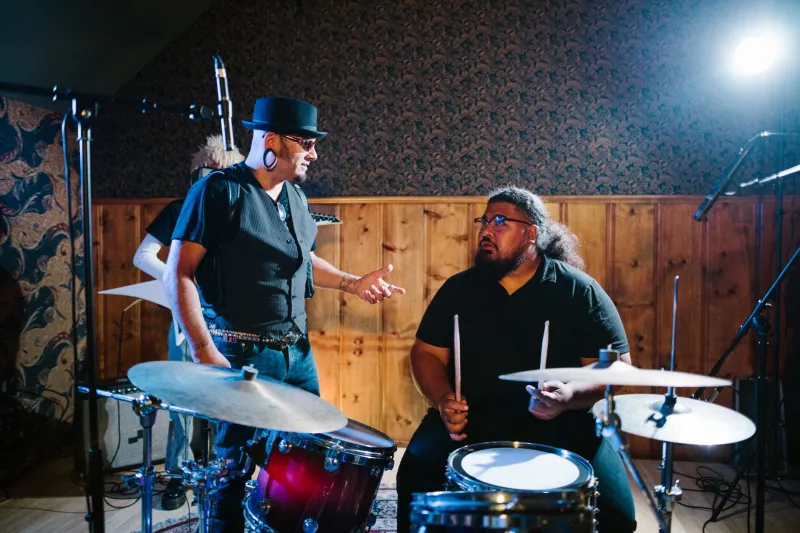
Photo by Photo by Or Hakim on Unsplash on Unsplash
Ask most Americans under thirty to describe jazz and you will likely receive one of two answers. The first invokes the soft, inoffensive saxophone lines piped through hotel lobbies and dentist office waiting rooms—the particular genre purgatory that the industry branded as smooth jazz in the 1980s and that has haunted the music's public image ever since. The second answer, offered by those who have been paying closer attention lately, sounds entirely different. It sounds like Charlie Parker playing at a tempo that defies comprehension. It sounds like Cecil Taylor's clusters, or Kamasi Washington's orchestral ambition, or a young musician in Brooklyn playing something that has no name yet.
The distance between those two answers has shrunk considerably in the past three years, and a significant portion of the credit belongs to a cohort of creators on TikTok who have made it their mission to correct the record.
The Platform Nobody Expected
TikTok was not designed with jazz in mind. Its algorithm rewards brevity, immediacy, and emotional impact—qualities that, on the surface, seem antithetical to a genre whose defining works frequently exceed twenty minutes and demand sustained intellectual engagement. And yet the platform has become, improbably, one of the most effective jazz education tools in recent memory.
The creators driving this shift are not, for the most part, marketing professionals or media strategists. They are musicians, music students, and devoted listeners who recognized that the platform's constraints could be turned into assets. A sixty-second clip demonstrating the difference between a ii-V-I chord progression and a tritone substitution, set against a driving rhythm section, communicates something that a textbook page cannot. The viewer hears it. They feel the difference. They want to know more.
Creators like saxophonist and educator Marcus G., who built a following exceeding 400,000 through videos that dissect bebop vocabulary with the clarity of a master class, or drummer Zoe T., whose historical timelines connect Louis Armstrong to Thundercat in under a minute, are representative of a broader trend. These individuals are not dumbing the music down—they are finding the sharpest possible entry points and trusting their audiences to follow.
Naming the Enemy Directly
What distinguishes the most effective creators in this space is their willingness to address the smooth jazz problem head-on rather than ignoring it. Videos with titles like "This Is NOT Jazz" rack up millions of views by playing a familiar Kenny G track, pausing it, and then cutting to a Thelonious Monk recording—letting the contrast make the argument without a single word of editorializing. The comment sections on these videos are instructive: thousands of viewers expressing genuine surprise, many of them writing some version of I had no idea jazz actually sounded like this.
This direct approach carries a certain irreverence that traditional jazz institutions have rarely permitted themselves. The Lincoln Center model of jazz education, however admirable in its rigor, has often communicated a kind of reverence for the music that inadvertently signals exclusivity. TikTok creators, by contrast, treat jazz as something thrilling and accessible and slightly dangerous—which, historically speaking, is precisely what it was.
Bebop in the For You Page
The specific subgenres receiving the most attention in this ecosystem are telling. Bebop—long considered the genre's most forbidding territory for newcomers, with its demanding tempos and complex harmonic language—has become something of a TikTok phenomenon. Creators who slow down Parker solos, highlight the logic of each phrase, and explain the revolutionary audacity of what the beboppers were doing in Harlem in the 1940s are finding that viewers respond not with confusion but with awe.
Free jazz and avant-garde improvisation have also found unexpected advocates on the platform. Videos that contextualize the political and artistic motivations behind Ornette Coleman's The Shape of Jazz to Come or Albert Ayler's cathartic noise have introduced these recordings to listeners who encountered them first as memes or jokes and then, guided by a patient creator, began to hear them as the serious artistic statements they are.
The Conversion Question
Skeptics might reasonably ask whether a TikTok video ever actually converts a viewer into a committed jazz listener—or whether the attention generated on the platform evaporates as quickly as it arrives. The evidence, while anecdotal, is encouraging. Jazz streaming numbers have risen steadily among the 18-to-34 demographic over the past several years, a trend that correlates meaningfully with the period of TikTok's explosive growth. Bandcamp and vinyl retailers report increased traffic from younger buyers seeking recordings that were recommended or featured in short-form video content.
More significantly, several of the platform's most prominent jazz creators have leveraged their followings into longer-form educational content—YouTube series, Substack newsletters, Patreon-supported lesson programs—suggesting that the pipeline from sixty-second hook to sustained engagement is real and replicable.
Reclaiming the Narrative
The history of jazz is, in many respects, a history of the music being misunderstood, misrepresented, and stripped of its radical intent by the commercial machinery of American entertainment. The smooth jazz phenomenon of the past four decades represents perhaps the most complete expression of that tendency. What the TikTok generation of jazz advocates is doing—with humor, precision, and evident love for the music—is participating in the long tradition of reclamation that has always been part of jazz's story.
The halo around this music has never dimmed. It simply needed new voices, and a new medium, to make it visible again.