The Second Coming: How Forgotten Jazz Records Are Finding Their Moment Again

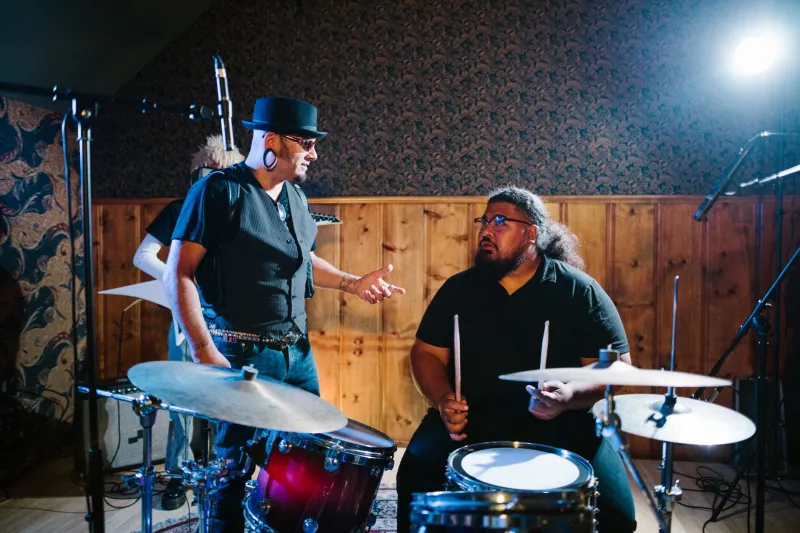
Photo by Photo by Mick Haupt on Unsplash on Unsplash
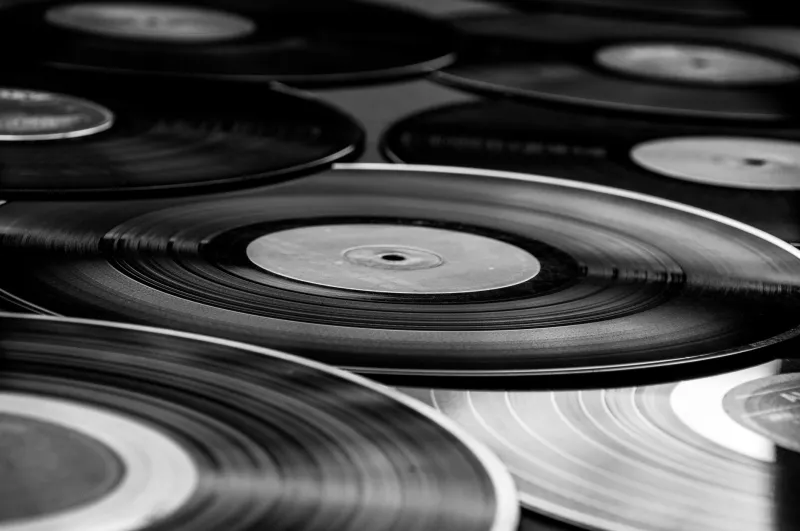
Somewhere in a climate-controlled storage room in New Jersey, a retired music librarian named Gerald Hutchins keeps roughly four thousand jazz LPs that the world, for the most part, has never heard. Some are regional pressings from mid-century Pittsburgh. Others are private-label recordings from New Orleans social clubs that never achieved wider distribution. A handful are test pressings that never became commercial releases at all. For most of his adult life, Hutchins assumed these records would follow him quietly into irrelevance. Recently, he has begun to reconsider.
"I've had more calls in the past three years than in the previous twenty combined," Hutchins said during a telephone conversation last spring. "Producers, archivists, bloggers — people I've never heard of, reaching out about records I thought nobody cared about anymore."
The phenomenon Hutchins is describing has a name in certain corners of the jazz community: the halo effect. It is the moment when a forgotten album, a neglected regional scene, or an overlooked artist suddenly acquires cultural momentum — not through any deliberate campaign, but through the convergence of algorithmic recommendation, critical reassessment, and the particular restlessness of listeners who have exhausted the canonical catalog and are hungry for something genuinely new.
Algorithms as Archivists
The mechanics of rediscovery have changed substantially in the past decade. Where earlier generations of jazz enthusiasts depended on trusted critics, specialist record shops, and word of mouth within tight-knit communities, today's listeners increasingly encounter obscure material through the recommendation engines embedded in streaming platforms. Spotify's "Similar Artists" pathways and Apple Music's editorial playlists have, in several documented instances, introduced mainstream audiences to recordings that spent thirty or forty years in commercial dormancy.
The case of pianist Horace Tapscott offers a useful illustration. Tapscott spent the better part of his career in Los Angeles, leading the Pan Afrikan Peoples Arkestra and recording prolifically for his own Nimbus West label throughout the 1970s and 1980s. His work was celebrated within South Central Los Angeles but remained virtually unknown to the broader jazz public. When a small reissue label digitized a selection of his recordings and distributed them through major streaming platforms around 2015, the algorithmic machinery took over. Listeners who had been exploring the Association for the Advancement of Creative Musicians catalog found Tapscott appearing in their recommended queues. Within two years, what had been an arcane collector's interest became a legitimate critical rediscovery, with major publications producing retrospective features and his recordings accumulating millions of streams.
"The algorithm doesn't know history," observed Yolanda Ferris, a music archivist based in Chicago who has spent fifteen years digitizing recordings from independent Black-owned labels. "It knows patterns. And sometimes those patterns accidentally do justice to artists who were systematically excluded from the mainstream the first time around."
The Reissue Economy
Streaming alone does not fully account for the revival phenomenon. Behind most successful rediscoveries is a reissue label willing to invest in restoration, licensing, and the curatorial work of contextualizing recordings for contemporary audiences. Labels such as Craft Recordings, Resonance Records, and the Mosaic imprint have built entire business models around the proposition that the jazz archive is both artistically valuable and commercially viable — provided the presentation is thoughtful enough to justify the listener's attention.
Resonance Records' 2016 release of previously unissued Bill Evans recordings from the Village Vanguard demonstrated the commercial ceiling that a well-executed archival project could reach. The release generated significant mainstream press coverage and introduced Evans's late-period work to listeners who had never previously engaged with his catalog. More significantly for the purposes of this discussion, it demonstrated that audiences were willing to pay premium prices for archival material when the surrounding context — liner notes, historical photography, critical essays — made the purchase feel like participation in something meaningful.
Producer and archivist Don Sickler, who has spent decades working on jazz reissues, argues that the curatorial dimension is inseparable from the commercial one. "You can't just put a record out and expect people to understand why it matters," he said. "You have to tell the story. You have to give people the framework to hear what they're hearing."
Regional Scenes and the Politics of Remembering
Not all rediscoveries are equal, and the question of which overlooked scenes receive attention — and which remain overlooked — is not politically neutral. The jazz archive, like most cultural archives, reflects the priorities of those who controlled its creation. Recordings made by musicians in New York and Los Angeles were more likely to receive national distribution, critical coverage, and eventual preservation than those produced in Detroit, Cincinnati, or Houston.
The recent critical attention given to the Detroit jazz scene of the 1950s and 1960s — a tradition that produced figures including Barry Harris, Yusef Lateef, and Tommy Flanagan — represents a partial corrective to this geographic bias. But archivists and scholars are quick to note that Detroit's revival has benefited from the presence of institutional advocates, including the Detroit Jazz Center and several university-based music programs, that many smaller regional scenes lack entirely.
"There are entire scenes that will never be rediscovered because nobody preserved the recordings," said Dr. Amara Washington, a musicologist at Howard University who specializes in African American music history. "The halo effect only works if something survived. And survival was never equally distributed."
What the Listener Brings
Perhaps the most underexamined element of the rediscovery phenomenon is the psychological dimension — the particular quality of attention that a listener brings to an album encountered not as a canonical text but as a genuine discovery. Several listeners interviewed for this article described their encounters with obscure archival recordings in terms that emphasized the sense of personal ownership that comes from finding something outside the established canon.
"When I found a copy of a 1971 recording by a pianist I'd never heard of at an estate sale in Baltimore, I felt like I was the only person in the world who knew about it," said Marcus Okafor, a Washington, D.C.-based jazz enthusiast in his early thirties. "That feeling made me listen differently. More carefully."
This quality of attention, archivists and producers suggest, may be the most valuable thing the revival phenomenon produces. In a cultural moment defined by abundance and distraction, the experience of genuinely discovering something — of feeling that one has accessed a piece of history that has not yet been processed into content — retains a power that no algorithm can entirely manufacture.
Gerald Hutchins, back in his New Jersey storage room, understands this instinctively. "Every record in here was somebody's whole world at some point," he said. "The question is whether it gets to be somebody's whole world again." Given the forces currently at work in the jazz ecosystem, the odds of that happening — at least for some of those four thousand LPs — appear better than they have in a very long time.