The Art of Disappearing Into the Music: Jazz's Quiet Revolution Against the Documenting Impulse
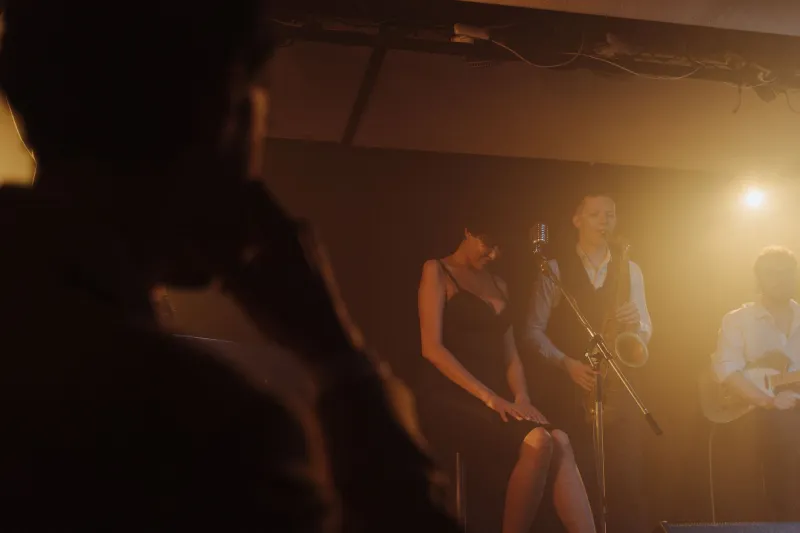
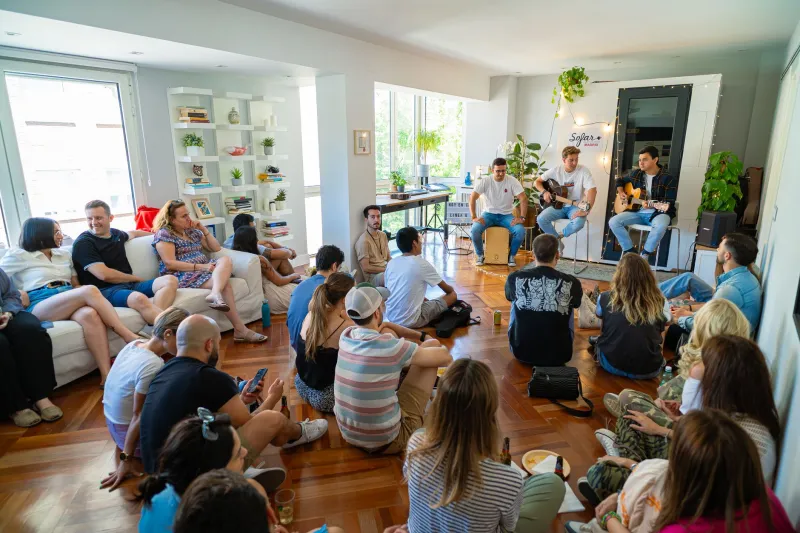
The lights dim at a small jazz club on a Tuesday evening. The quartet takes the bandstand. The pianist opens with a chord that hangs in the room like smoke. And then, in an increasing number of venues across the United States, something unusual happens: the audience simply listens. No phones rise above the sightlines. No screens illuminate faces in the darkness. The music exists, for the duration of its existence, only in the room where it is played and in the bodies of the people gathered to receive it.
This is not the result of a venue policy, though some clubs have begun implementing them. It is, in many cases, a voluntary choice — a quiet, deliberate act of resistance by a subset of jazz listeners who have concluded that the impulse to document, share, and perform their own concert experience has come at a cost they are no longer willing to pay.
The Documentation Reflex and Its Discontents
To understand what these listeners are pushing back against, it is useful to examine how thoroughly the documentation reflex has colonized the live music experience over the past fifteen years. The widespread adoption of smartphones transformed concert attendance from a private, ephemeral experience into a semi-public performance in its own right. Audiences became producers of content. The concert was not merely something to be experienced; it was something to be captured, curated, and broadcast.
For certain genres and settings, this transformation has been largely benign or even beneficial. Short video clips of rock or pop performances circulate widely and serve a genuine promotional function for artists. Festival documentation has become a genre of its own, with dedicated photographers and videographers producing work of real aesthetic value.
Jazz, however, presents a particular case. The music's defining characteristic — its improvisational core, its existence as a series of unrepeatable decisions made in real time — is in direct tension with the logic of documentation. A photograph or a thirty-second video clip captures a surface. It cannot capture the internal experience of listening to a musician navigate an unexpected harmonic turn, or the collective held breath of an audience when a soloist takes a phrase somewhere no one anticipated.
More fundamentally, the act of reaching for a phone to document a performance is an act of partial departure from it. Attention is finite. The cognitive resources devoted to framing, capturing, and mentally composing a post are resources no longer available for listening.
What Venue Owners Are Observing
Operators of jazz clubs in cities including New York, Chicago, San Francisco, and Washington, D.C., have begun noticing and, in some cases, actively cultivating audiences who engage with performances on these terms. The Village Vanguard in New York has long maintained a culture of attentive listening that discourages casual phone use, and the club's management has spoken publicly about the relationship between that culture and the quality of performance it tends to attract and sustain.
Smaller, more recently established venues have taken more explicit positions. Some post requests at the entrance asking patrons to refrain from video recording during performances. Others have built their programming and marketing around the concept of the fully present listening experience, attracting an audience that self-selects for that orientation.
What these operators report is consistent: audiences that engage without the mediation of a device tend to be more responsive, more likely to return, and more likely to develop the kind of deep loyalty to specific artists and venues that sustains a jazz community over time. The attentive listener, it turns out, is also the committed one.
The Musicians' Perspective
For many jazz musicians, the question of audience documentation is not merely a matter of preference but of artistic principle. Improvisation requires a particular kind of vulnerability — a willingness to fail in public, to pursue an idea that may not resolve satisfactorily, to take risks that could produce something extraordinary or something that simply does not work. That vulnerability is easier to access when the performance is understood to be ephemeral, to belong to the room and the moment rather than to a permanent record.
Several prominent jazz artists have spoken candidly about the way pervasive documentation changes their relationship to risk-taking on stage. When every performance is potentially a clip that will circulate without context, the incentive structure shifts subtly but meaningfully toward the safe, the demonstrably impressive, the easily legible in thirty seconds. The deep, slow unfolding of an extended improvisation — the kind of musical experience that jazz is uniquely capable of providing — does not translate well to short-form video. And musicians who are aware of being recorded are not always entirely unconscious of that fact.
Presence as a Practice
Among listeners who have adopted what some are calling the silent session approach — attending concerts with phones off or stowed, eyes sometimes closed, attention wholly directed toward the sound — the experience is frequently described in terms that overlap with contemplative or meditative practice. The deliberate withdrawal of distraction, the commitment to remaining with the music through its difficult passages as well as its exhilarating ones, produces a quality of engagement that participants describe as rare in contemporary life.
This framing is not incidental. The appeal of the fully present listening experience is inseparable from broader cultural anxieties about attention, distraction, and the degree to which digital mediation has altered the texture of lived experience. Jazz, with its demand for active, participatory listening, offers a particularly clear arena in which these questions can be felt rather than merely discussed.
There is something fitting about jazz serving as the site of this particular counterculture moment. A music built on the principle that the unrepeatable is the most valuable thing — that the phrase played once and never again is the phrase worth hearing — has a natural affinity with an audience that has decided to be fully present for what cannot be recovered.
What Is Lost When We Stop Documenting
Fairness requires acknowledging what the documentation impulse has also provided. Social media sharing has introduced jazz to listeners who might never have encountered it through traditional channels. Short video clips of exceptional performances have built audiences for musicians who lacked the promotional infrastructure of major labels. The accessibility of recorded concert footage has been genuinely democratizing for listeners outside major urban centers who cannot attend performances in person.
The question is not whether documentation has value but whether it has come to displace something of equal or greater value — the direct, unmediated encounter with music as it happens. The listeners choosing to put their phones away are not arguing that documentation is worthless. They are arguing that it has its place, and that its place is not inside the music.
In a culture that has grown accustomed to experiencing everything through a screen, that argument feels, at minimum, worth hearing.