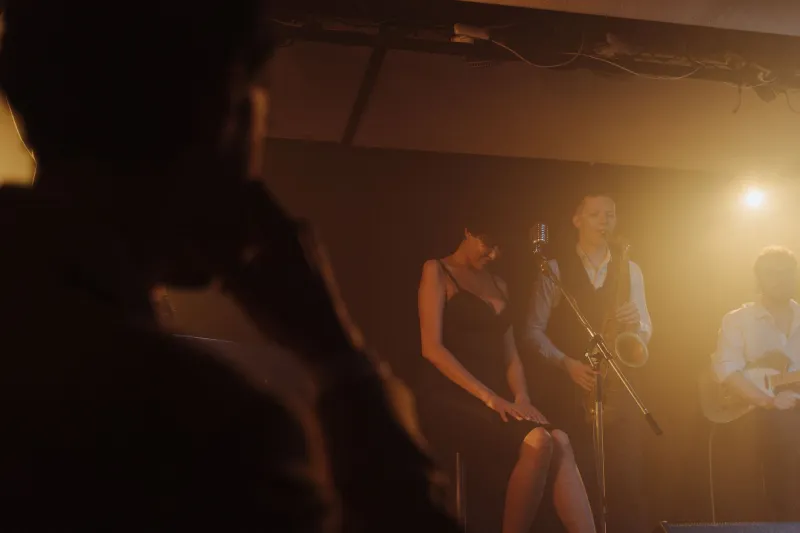
Front Porch to Warehouse Floor: How Jazz Musicians Are Rebuilding the Rent Party for a New Era
In Harlem during the 1920s and 1930s, a rent party was both an economic necessity and a cultural institution. A tenant facing eviction would charge a small admission at the door, invite musicians to play, and transform financial precarity into communal celebration. Fats Waller played them. James P. Johnson played them. The music was real, the stakes were real, and the community that gathered was bound together by something more durable than a concert ticket.
Nearly a century later, a growing number of jazz musicians across the United States are returning to this model — not out of nostalgia, but out of necessity and, increasingly, out of conviction. As traditional jazz venues continue to struggle with rising rents, declining foot traffic, and the structural economics of live music in major cities, grassroots alternatives are emerging in living rooms, warehouses, converted garages, and rooftop spaces. The rent party has not merely returned. It has been reinvented.
Why the Old Infrastructure Is Failing
To understand the rent party revival, one must first reckon with the fragility of the infrastructure it is replacing. The past decade has seen the closure of storied jazz venues in cities that once defined the music's geography. New York alone has lost multiple clubs that sustained working musicians for generations. Chicago, Philadelphia, Los Angeles, and New Orleans have each witnessed the disappearance of rooms that were not simply performance spaces but community anchors — places where musicians developed material, built audiences, and mentored younger players.
The economics driving these closures are not mysterious. Commercial real estate pressure in urban centers has made it difficult for low-margin live music venues to survive. The jazz club business model, which depends on consistent turnout for performances that rarely generate the kind of revenue associated with pop or rock concerts, was always fragile. The pandemic accelerated closures that were already underway, and the recovery has been uneven.
For working jazz musicians — the vast majority of whom earn their living through a combination of performance, teaching, and recording — the shrinking venue landscape is not an abstraction. It is a direct reduction in income and professional opportunity.
The New Rent Party in Practice
In response, musicians in cities across the country have begun organizing performance events that operate outside the traditional venue system entirely. The formats vary considerably, but the underlying logic is consistent: reduce overhead by eliminating the commercial middleman, strengthen community bonds through intimate settings, and ensure that a meaningful share of revenue reaches the artists directly.
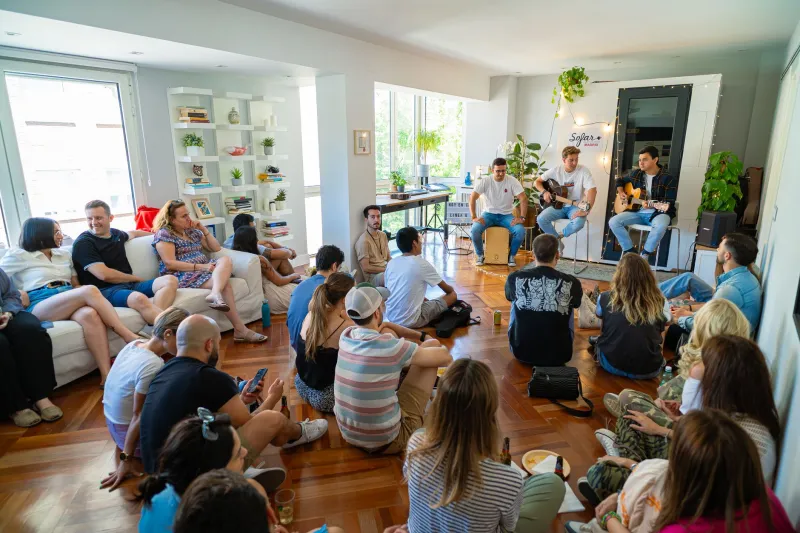
In Brooklyn, informal house concert series have proliferated in neighborhoods where the displacement of jazz clubs has been most acute. Hosts open their apartments or brownstone parlors to audiences of twenty or thirty listeners, charge a suggested donation at the door, and pass the proceeds directly to the musicians. The intimacy of these settings produces a quality of listening — and of performance — that many participants describe as qualitatively different from the club experience.
In Chicago's South Side, musicians have organized pop-up concerts in warehouse spaces and community centers, drawing on the neighborhood's deep jazz and blues heritage while addressing the practical reality that many residents lack easy access to the commercial venues clustered in other parts of the city. These events function simultaneously as performances, community gatherings, and statements about whose neighborhoods deserve live music.
In New Orleans, where the rent party tradition intersects with a deep history of second-line culture and neighborhood mutual aid, musicians have organized events that blend performance with explicit community support functions — raising funds for artists facing medical expenses, housing crises, or equipment loss.
Technology as Organizer, Not Replacement
One significant difference between the original rent party and its contemporary incarnation is the role of digital tools in organizing and publicizing events. Musicians and organizers are using private social media groups, email newsletters, and ticketing platforms such as Eventbrite to coordinate attendance, manage capacity, and handle payment in ways that were impossible in the 1920s.
This creates an interesting dynamic. The events themselves are deliberately intimate and analog in character — designed to foster the kind of direct, unmediated connection between musicians and audiences that commercial venues often struggle to provide. Yet they depend on digital infrastructure to reach the audiences that make them viable.
Some organizers have gone further, using platforms like Bandcamp and Patreon to create subscription models that fund ongoing performance series. Supporters pay a monthly or annual fee in exchange for access to events, recordings, and direct communication with the artists involved. This approach essentially transforms the rent party from a one-time emergency measure into a sustainable revenue model.
What Is Gained in the Parlor
Beyond the financial mechanics, participants in these events consistently describe something less quantifiable: a shift in the quality of attention that intimate, communal performance settings make possible. When an audience of twenty-five people gathers in a living room to hear a quartet play, the social dynamics of the concert experience change fundamentally. Musicians can hear individual listeners react. Conversations happen naturally between sets. The distance between artist and audience — architectural, psychological, economic — collapses.
For jazz, a music whose improvisational character thrives on real-time human exchange, this collapse of distance is not incidental. It is central to what the music is capable of being. Some of the most significant performances in jazz history took place in small, informal settings where the absence of commercial pressure allowed musicians to take risks they might not have taken on a larger stage.
The Limits of the Model
The rent party revival is not without its complications. Informal performance spaces exist in a gray area with respect to zoning, noise ordinances, and fire codes that can create genuine legal exposure for hosts and organizers. In cities where code enforcement has been inconsistently applied, this risk falls disproportionately on musicians and community organizers in lower-income neighborhoods.
There is also the question of scale. The rent party model is well-suited to sustaining a community of deeply committed listeners and supporting individual musicians through specific financial challenges. It is less suited to developing the kind of broad public audience that jazz needs to remain a living presence in American culture rather than a connoisseur's pursuit.
The most thoughtful advocates of the model acknowledge this tension directly. The goal, they argue, is not to replace the broader infrastructure of jazz presentation but to build resilience at the community level — to ensure that when commercial venues disappear, the music and the community around it do not disappear with them.
In that sense, the rent party revival is less a nostalgic gesture than a pragmatic one. It is musicians and communities choosing to sustain what they love by any means available, just as their predecessors did in Harlem a century ago.