The Informed Ear on a Thin Wallet: A Jazz Collector's Guide to Spending Wisely
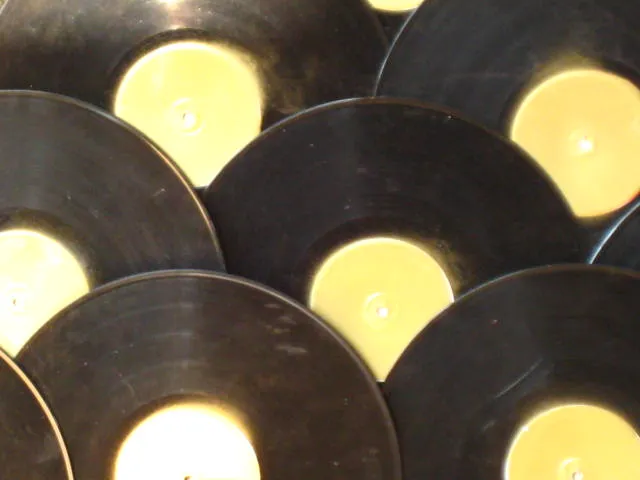
Photo: Donnie Ozone, CC BY 2.0, via Wikimedia Commons
Let us dispense with the mythology immediately. The image of the jazz collector as a financially reckless obsessive, spending rent money on original Blue Note pressings and haunting specialist shops with the intensity of a man pursuing a personal vendetta — this image, while not entirely fictional, describes a very small fraction of the people who love jazz deeply and collect it seriously. The majority of devoted jazz listeners in this country have built remarkable collections on modest budgets, through patience, strategic thinking, and a willingness to treat discovery as a discipline rather than a transaction.
This guide is for those people. It is also for the newcomer who has recently fallen under jazz's considerable spell and is wondering how to build a listening life without bankrupting themselves in the process.
Start With the Stream, But Do Not Stay There
Streaming platforms represent the most cost-effective entry point into the jazz catalog that has ever existed. For the price of a single vinyl LP per month, a new listener can access the complete recorded output of Miles Davis, John Coltrane, Thelonious Monk, and several hundred other artists of comparable stature. The pedagogical value of this access is enormous and should not be underestimated.
The strategic listener uses streaming not as a destination but as a laboratory. Spend the first several months of your jazz education using a platform like Spotify, Apple Music, or Tidal to map the territory. Follow the connective tissue between artists — the sidemen who appear on multiple recordings, the producers whose names recur across different sessions, the labels whose catalogs share a consistent sonic sensibility. Build playlists that trace the evolution of a single idea across decades. Use the "Radio" and "Similar Artists" functions not as passive entertainment but as active research tools.
Tidal deserves particular mention for the serious jazz listener. Its Masters and Hi-Fi tiers offer lossless audio quality that reveals details in older recordings — the specific texture of a brushed snare, the particular resonance of a Steinway in a particular room — that compressed formats obscure. At approximately eleven dollars per month, it represents exceptional value for the listener who has moved beyond casual engagement.
The Used Record Shop as Graduate School
Once you have developed a foundational understanding of the canon through streaming, the used record shop becomes your graduate program. The economics here are more favorable than many newcomers assume. Original pressings of genuinely rare recordings command prices that can reach into the hundreds of dollars, but the vast majority of jazz on vinyl — including recordings of extraordinary quality and historical significance — is available in used condition for between three and fifteen dollars per record.
The key to navigating used shops effectively is specificity. Do not walk into a record shop hoping to be surprised by whatever happens to be in the jazz section. Arrive with a list. Know which albums you are seeking, know the label and approximate year of issue for the pressings you would consider purchasing, and develop the habit of checking condition methodically before committing to a purchase. Surface noise on a jazz record, particularly one recorded in a small acoustic space, can render an otherwise significant artifact genuinely unpleasant to hear.
Chains such as Second Spin and local independent shops in most major American cities maintain rotating stock that rewards regular visits. In cities with large populations of older jazz enthusiasts — Chicago, Philadelphia, Detroit, New Orleans — the used shop ecosystem tends to be particularly rich, as collections accumulated over decades regularly enter the secondary market.
The Estate Sale as Archaeological Site
For the collector willing to invest time rather than money, estate sales represent the most consistently rewarding source of underpriced jazz recordings in the country. The website EstateSales.net aggregates listings from across the United States and allows users to search by location and keyword. A Saturday morning habit of checking listings within a reasonable driving radius, combined with the discipline to arrive early on the first day of a sale, can yield extraordinary results.
The economics of estate sales favor the knowledgeable buyer. The individuals pricing records at estate sales are typically not jazz specialists. A collection assembled by a serious listener over forty years may be priced at fifty cents to two dollars per record, regardless of its actual market value. The collector who arrives with knowledge and a clear list can acquire, in a single morning, what would cost several hundred dollars at a specialist shop.
This approach requires patience and a tolerance for the occasional fruitless trip. It also requires a certain comfort with the melancholy that attaches to the dispersal of a lifetime's collection. The best estate sale finds carry with them the weight of someone else's devotion, and the serious collector learns to honor that inheritance.
Managing the Psychology of FOMO
No guide to jazz collecting on a budget is complete without an honest accounting of the psychological pressures that work against financial discipline. The fear of missing out — of failing to acquire the pressing that will never appear again, of watching a record sell on Discogs for twice what it was listed at last week — is real and can produce genuinely irrational spending decisions.
The antidote to FOMO in jazz collecting is a conviction that has been validated by the experience of virtually every serious collector this writer has encountered: the music is inexhaustible. There is no version of the jazz catalog that, once fully acquired, leaves the listener with nothing left to discover. The canon is deep enough that a lifetime of attentive listening will not exhaust it, and the periphery of that canon — the regional recordings, the private pressings, the overlooked sideman dates — extends further than any single collector can map.
From this perspective, the record that got away is not a loss. It is a reminder that the pursuit continues, which is, for most serious collectors, precisely the point.
A Practical Starting Framework
For the listener beginning to build a physical collection from scratch, a reasonable initial framework might look something like this: allocate a monthly budget of thirty to fifty dollars specifically for physical media. Prioritize albums you have already heard and know you will return to repeatedly over albums you are curious about but have not yet evaluated. Buy used whenever possible. Avoid the temptation to acquire complete discographies before you have developed a genuine relationship with an artist's work.
Above all, remember that the goal of a jazz collection is not the collection itself. It is the listening. Every dollar spent on a record that sits unplayed on a shelf is a dollar that could have funded an evening at a local jazz club, a streaming subscription, or a used copy of an album that will genuinely change how you hear music. The collection serves the listening, not the other way around. Collectors who internalize this principle tend to spend more wisely — and, not coincidentally, tend to enjoy their collections more deeply.