Miles From Home: The Devoted Jazz Fans Who Cross America to Chase the Music They Love
There is a particular kind of restlessness that strikes the serious jazz listener sometime in early spring. The streaming queues have been exhausted, the vinyl stack has been turned over twice, and the local club calendar offers nothing new. What follows, for an increasing number of American jazz devotees, is not resignation — it is a map, a tank of gas, and a festival itinerary printed in careful detail.
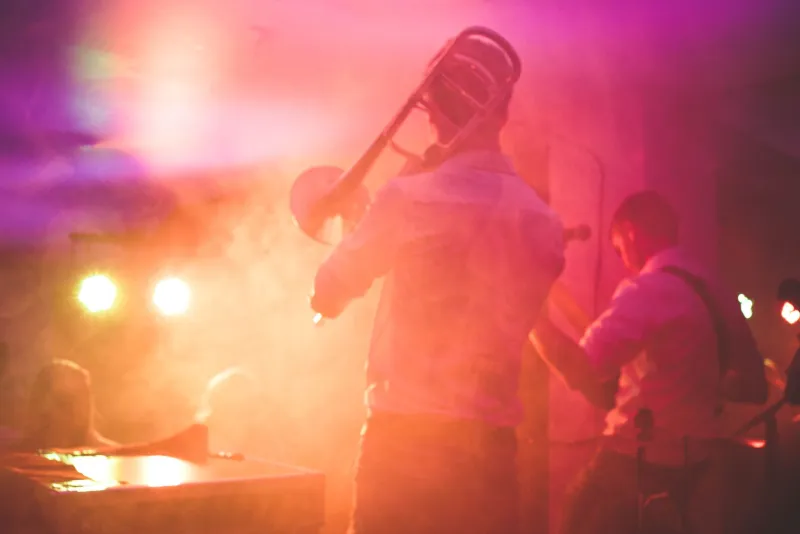
Call it the jazz pilgrimage. Across the United States, dedicated listeners are organizing their vacations, their long weekends, and in some cases their entire annual calendars around live jazz experiences. From the sprawling outdoor stages of the Newport Jazz Festival in Rhode Island to the intimate listening rooms of New Orleans' Frenchmen Street, from the historic Blue Note in Greenwich Village to a converted warehouse in Kansas City hosting a regional summit of hard bop traditionalists, these travelers are chasing something that no home speaker system can adequately reproduce: the unrepeatable present tense of live improvisation.
More Than Tourism
To dismiss this phenomenon as mere fandom would be to misread its character entirely. Those who plan their lives around jazz pilgrimages frequently describe the experience in terms that border on the devotional. The music itself is the destination, but what surrounds it — the conversations in the parking lot, the shared meals before the first set, the post-concert debates that stretch past midnight — forms an equally essential part of the journey.
Social platforms have accelerated and organized this community in ways that would have seemed improbable a generation ago. Private Facebook groups with names like "Jazz Road Warriors" and "Festival Faithful" function as informal travel agencies, with members pooling accommodation recommendations, coordinating carpools from regional airports, and debating the relative merits of this year's headliners with the kind of analytical rigor that might surprise those who assume jazz audiences are passive.
Reddit communities dedicated to jazz travel have become particularly active in the months preceding major festival seasons. Threads comparing the acoustic qualities of different venues, warning newcomers about parking logistics near Millennium Park in Chicago during the Chicago Jazz Festival, or recommending the best neighborhood restaurants within walking distance of the Detroit Jazz Festival draw hundreds of engaged responses. The knowledge being exchanged is granular, generous, and entirely crowd-sourced.
The Revitalization No One Planned
What has caught the attention of venue owners and regional arts organizations alike is the economic and cultural downstream effect of this traveling audience. Smaller cities that host jazz events — Monterey, California; Bix Beiderbecke's hometown of Davenport, Iowa; Savannah, Georgia during its annual jazz festival — report that a meaningful portion of their audiences now arrive from outside the immediate region. These visitors stay in local hotels, eat in local restaurants, and often return the following year.
For regional jazz scenes that have spent years competing for local attention against more commercially dominant genres, the influx of committed out-of-town listeners carries significance beyond the financial. A club that might draw a modest local crowd on a Friday night suddenly becomes a destination for people who drove four hours specifically to hear the music performed well. That energy is not lost on the musicians performing, nor on the local fans who discover that their scene is valued by the wider world.
Venue operators in cities like Asheville, North Carolina, and Austin, Texas have noted that jazz tourism is quietly distinct from other forms of music travel. Jazz pilgrims tend to be repeat visitors, tend to purchase physical merchandise and recordings, and tend to engage with the local scene rather than simply consuming the headline act and departing. They ask about the opening act. They linger.
A Counterstatement to the Algorithm
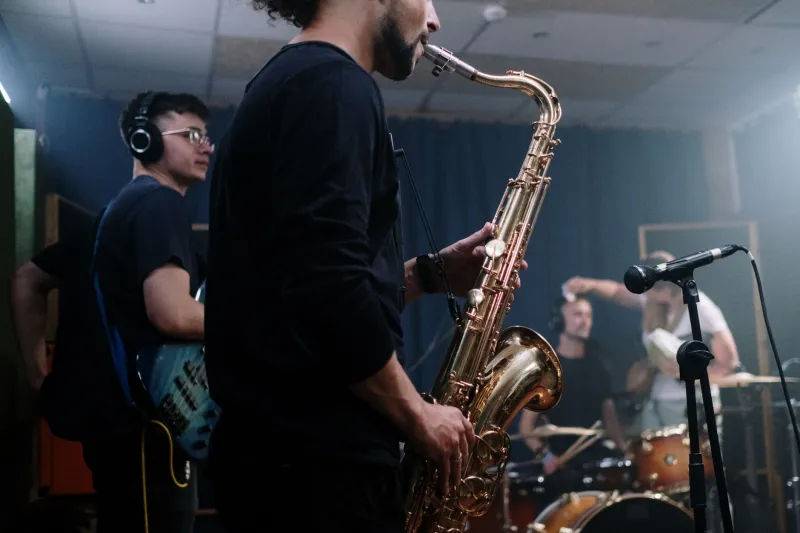
It would be difficult to examine this movement without acknowledging its implicit cultural argument. In an era when virtually all recorded jazz is available instantaneously through streaming platforms, the decision to drive six hundred miles to hear a saxophonist perform in a room that holds two hundred people is, whether consciously or not, a statement about what recorded music cannot provide.
The jazz pilgrimage is, in this sense, a form of resistance — not angry or ideological, but quiet and persistent. It insists that presence matters. It argues that the risk inherent in live improvisation, the possibility that something extraordinary or something flawed might occur in real time, is precisely what makes the experience irreplaceable. A streaming algorithm can predict your preferences with uncanny accuracy. It cannot give you the moment when a pianist reaches something unexpected in the third chorus of a ballad, and the room collectively holds its breath.
Several longtime pilgrims interviewed for this piece used variations of the same language when asked why they travel for music they could technically hear at home. "The recording is the memory," one Chicago-based listener explained. "The live show is the thing itself."
The Community That Forms in Transit
Perhaps the most quietly remarkable aspect of jazz travel culture is what happens between the performances. The friendships formed in festival lines, at merch tables, and in the bars adjacent to late-night sets have produced what amounts to a distributed jazz community — one that is not anchored to any single city but exists in the connections between people who keep finding each other at the same venues across the country.
Some of these relationships have deepened into genuine ongoing friendships, coordinated through group chats and annual reunions at shared festivals. Others remain warm acquaintanceships that reconvene wherever the music leads. In both cases, they represent something the digital jazz community, for all its virtues, has difficulty replicating: the particular bond formed by having been in the same room when something extraordinary happened.
For the devoted listener who has already explored the recorded canon with care and attention, the pilgrimage offers a dimension that no playlist can supply. The music is the reason to go. The community that forms around it is the reason to return.