When the Music Becomes Medicine: Jazz Improvisation's Surprising Role in Mental Health Recovery
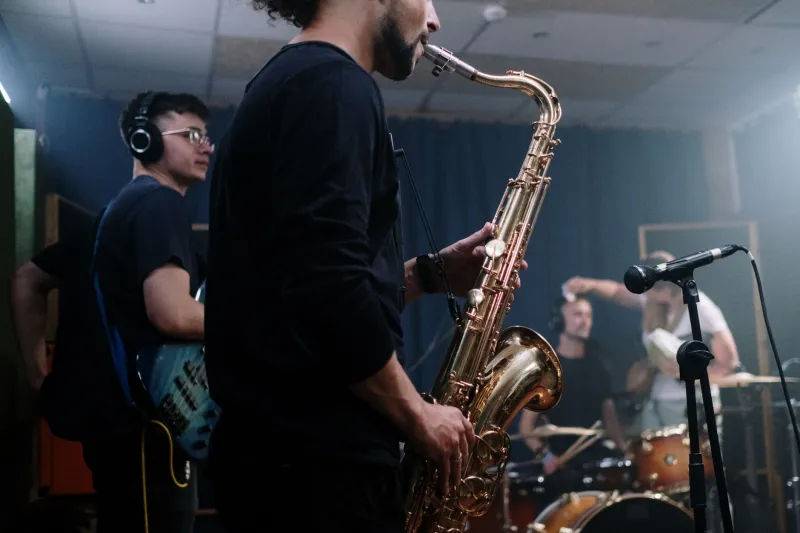
There is a moment in improvisation that every jazz musician knows intimately — the instant before a phrase resolves, when the outcome remains genuinely uncertain and the performer must trust instinct over calculation. For saxophonist and licensed music therapist Darnell Okafor, that moment of suspended possibility is precisely what makes jazz so therapeutically powerful. "In therapy, we call it tolerating ambiguity," Okafor explains from his practice in Chicago's South Side. "Jazz teaches that skill better than almost any other modality I've encountered. You learn to sit with the unknown and respond honestly rather than shut down."
Okafor is part of a quietly expanding community of musicians, clinicians, and researchers who are repositioning jazz not merely as an art form to be admired from concert hall seats, but as a living therapeutic instrument — one capable of addressing anxiety, depression, PTSD, and the kind of emotional dislocation that conventional talk therapy sometimes struggles to reach.
The Science Behind the Swing
Neuroscientists have been paying close attention. Researchers at Johns Hopkins University, in a landmark study using functional MRI technology, observed the brains of jazz pianists during improvisation and discovered something remarkable: the prefrontal cortex regions associated with self-monitoring and inhibition showed decreased activity, while areas linked to self-expression and language lit up with unusual intensity. The brain, in effect, was switching from editor mode to storyteller mode.
Dr. Priya Mehta, a cognitive neuroscientist at the University of Michigan who has built upon that foundational research, describes improvisation as "a form of embodied emotional narration." Her current work examines how regular engagement with improvisational music affects cortisol levels and the nervous system's capacity to regulate stress responses. "What we're finding," she says carefully, "is that the brain doesn't distinguish sharply between improvising music and processing unresolved emotional material. Both activities recruit similar neural networks. That overlap is not incidental — it may be the entire point."
For patients with PTSD in particular, the implications are significant. Traditional verbal therapy requires survivors to linguistically reconstruct traumatic experiences, a process that can re-traumatize rather than resolve. Jazz-based interventions offer a non-verbal pathway — one that allows emotional content to surface and move through the body without demanding that it be immediately named or explained.
Voices From the Room
Marcus Webb, a 34-year-old Army veteran from Columbus, Ohio, spent three years cycling through conventional therapeutic approaches after returning from two tours abroad. Progress was incremental and, at times, dispiriting. A chance encounter with a community music program introduced him to group jazz improvisation sessions facilitated by a trained therapist. The experience, he recalls, was disorienting at first.
"I hadn't played an instrument since middle school," Webb says. "But the therapist handed me a drum and said there was no wrong answer. That phrase — no wrong answer — hit me differently than I expected. In the places I'd been, there were always wrong answers. Sometimes fatally wrong ones."
Over several months, Webb found that the sessions provided something the clinical hour had not: a space where emotion could be expressed at full volume without consequence, where chaotic internal states could be externalized and then, crucially, listened to by others in the room. "The group would respond to what I played. They'd mirror it or answer it. For the first time, I felt like my experience was being heard without anyone flinching."
Webb's account echoes observations made by practitioners across the country. Jazz's inherent call-and-response architecture — a structural feature embedded in the music's African American roots — maps with striking precision onto the relational dynamics that therapeutic recovery depends upon. The tradition of musical conversation, of one voice speaking and another answering, creates a rehearsal space for the kind of attentive, reciprocal human connection that trauma tends to erode.
A Tradition With Deep Roots
It would be reductive to treat jazz therapy as an entirely modern innovation. Jazz has always carried the weight of collective suffering. The music emerged from communities navigating extraordinary hardship, and its expressive vocabulary was forged, in large part, by the need to articulate what could not be safely spoken aloud. Blues feeling, the bent note, the deliberate dissonance that resolves into something unexpectedly beautiful — these are not merely aesthetic choices. They are emotional technologies developed over generations.
Contemporary practitioners are, in many respects, formalizing what communities have understood intuitively for over a century. What is new is the clinical infrastructure surrounding that understanding — the credentialing programs, the peer-reviewed research, the integration into hospital settings and Veterans Affairs facilities.
The American Music Therapy Association now recognizes jazz-informed approaches within its broader certification framework, and several graduate programs in music therapy have begun incorporating jazz improvisation as a specific clinical competency. The Berklee College of Music in Boston offers coursework that bridges jazz performance and therapeutic application, a curriculum that would have seemed eccentric to earlier generations but now draws serious enrollment.
Challenges and Honest Limitations
Not everyone in the clinical community is ready to embrace the enthusiasm without reservation. Some psychiatrists and psychologists caution that music therapy, however promising, should be understood as a complementary intervention rather than a replacement for evidence-based treatments such as cognitive behavioral therapy or medication. The research base, while growing, remains relatively modest in scale, and standardization across programs is inconsistent.
Okafor acknowledges these limitations directly. "I'm not claiming jazz cures depression," he says. "What I'm saying is that it opens doors that other approaches sometimes can't. And in mental health care, an open door is enormously valuable."
The stigma surrounding mental health treatment in the United States remains a formidable obstacle, particularly within communities — including many in the jazz world itself — where vulnerability has historically been coded as weakness. Several musicians interviewed for this piece described their own struggles with anxiety and substance use, and noted that the performative bravado long associated with jazz culture had, for years, made it difficult to seek help.
There is something quietly poetic, then, about the music becoming part of the remedy. Jazz has always been a conversation between what is and what could be — between the written note and the improvised response, between isolation and communion. That it should now be finding application in the spaces where human beings attempt to heal their most private fractures feels less like a departure from the tradition than a deepening of it.
As Okafor puts it, settling back in his chair after a long session day: "The music was always trying to say something true. We're just finally learning to listen in new ways."