Unscripted by Design: Why Younger Listeners Are Finding Freedom in Jazz's Refusal to Repeat Itself
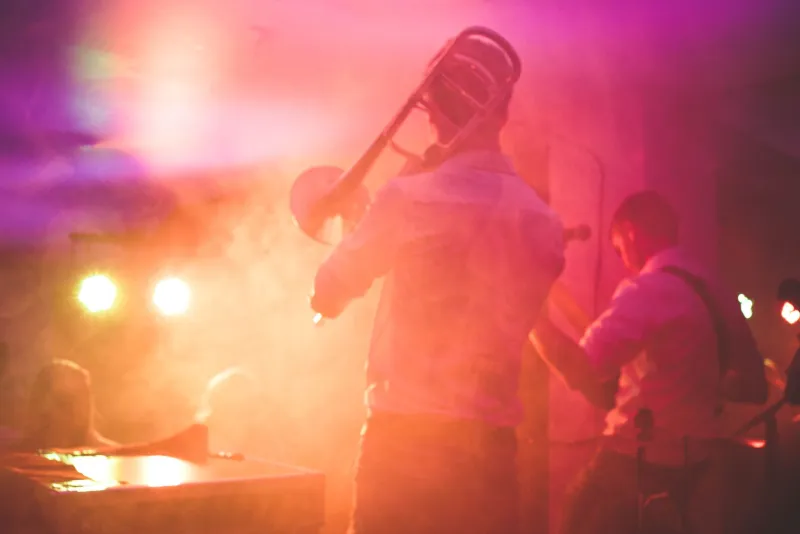
Spend an evening at a jazz club in any American city and you will notice something that the genre's supposed decline narrative tends to ignore: the faces in the room are getting younger. Not uniformly, not everywhere, and not in numbers sufficient to silence legitimate concerns about the music's institutional health. But the presence is real, and the reasons behind it are worth examining carefully.
A generation that has grown up entirely within the architecture of algorithmic recommendation—Spotify's Discover Weekly, TikTok's For You Page, YouTube's autoplay queue—is beginning to articulate a specific kind of exhaustion. The platforms designed to give listeners exactly what they want have, for many younger users, produced a sense of creative claustrophobia. Jazz, with its structural resistance to repetition and its insistence on the unrepeatable present moment, offers something that feels genuinely countercultural in 2024.
The Tyranny of the Familiar
To understand why jazz's unpredictability appeals to younger listeners, it helps to understand the environment they are reacting against. Streaming platforms optimize for engagement, which in practice means reinforcing existing preferences and minimizing the friction of encountering something genuinely unfamiliar. The listener who enjoys one particular artist will be served more of that artist, then artists who sound similar, then artists who occupy the same emotional register—a process that can, over time, narrow rather than expand musical horizons.
This is not a conspiracy; it is simply the logic of an attention economy. But for listeners who have grown up entirely within this system, the experience of music has become inseparable from the experience of being managed. The playlist knows what you like before you do. The algorithm anticipates your mood. Nothing arrives unexpectedly.
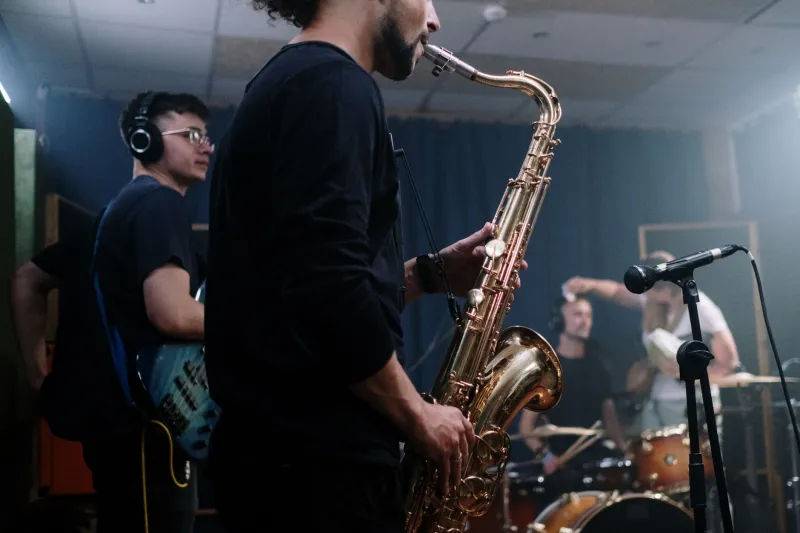
Jazz refuses this arrangement at a fundamental level. A live jazz performance cannot be pre-processed or pre-optimized. The musicians on stage are making decisions in real time, responding to each other, to the room, to the particular energy of a Tuesday night in November. The same band playing the same composition will produce something meaningfully different from what they played the night before. This is not a bug in the system; it is the entire point.
What Educators Are Observing
Jazz educators across the country have begun to notice a shift in the students arriving at their programs. The curiosity about improvisation—not merely as a technical skill but as a philosophical orientation—has grown more pronounced among younger musicians.
At institutions ranging from Berklee College of Music to community college jazz programs in the Midwest, instructors report that students are asking questions that go beyond the mechanics of scales and chord substitutions. They want to understand what it means to commit to a musical idea without knowing in advance how it will resolve. They are drawn to the vulnerability inherent in improvisation, to the fact that failure is always a genuine possibility and that possibility is precisely what makes success meaningful.
This interest extends beyond students who intend to pursue professional careers. Amateur musicians, hobbyist listeners, and young people who have never played an instrument are attending workshops and masterclasses in growing numbers, drawn by what one Midwest jazz educator described as a hunger for experiences that cannot be curated or controlled.
The Human Presence Problem
There is another dimension to this phenomenon that deserves attention: the specific appeal of live performance in an era of infinite recorded content. Generation Z has grown up with access to virtually all recorded music ever made. The scarcity that gave a particular album or performance its weight in earlier eras simply does not exist in the same way for a listener with a smartphone and a streaming subscription.
What remains genuinely scarce is presence. A jazz performance that happens on a specific night in a specific room will never happen again in precisely that form. The musicians' choices, the audience's response, the particular quality of attention in the space—these are irreproducible. For younger listeners who have absorbed the lesson that recorded content is essentially infinite and interchangeable, that irreproducibility carries real value.
This helps explain why jazz venues that have invested in the quality of the live experience—attentive sound, intimate seating, a culture of genuine listening—have found younger audiences more receptive than the conventional wisdom about the genre's demographics might suggest. The music is not simply a product being delivered; it is an event being shared.
Improvisation as Resistance
Several young musicians and listeners, when asked to articulate what draws them to jazz specifically, reach for language that sounds almost political. The word that recurs most often is authenticity—not in the overused marketing sense, but in the more demanding philosophical sense of something that cannot be manufactured or simulated.
Improvisation, in this reading, is a form of resistance to the logic of optimization. To improvise is to accept uncertainty, to act without a guarantee of success, to make something that has never existed before and will never exist again. These are values that feel radical in a media environment built around the elimination of uncertainty and the maximization of predictable satisfaction.
Young jazz musicians in cities like Chicago, Los Angeles, New York, and New Orleans are increasingly articulate about this dimension of their practice. They speak about improvisation not merely as a musical technique but as a way of being in the world—a refusal to pre-plan every outcome, a willingness to respond honestly to what is actually happening rather than to what was expected to happen.
The Genre's Ongoing Conversation
None of this suggests that jazz is on the verge of recapturing the mass cultural centrality it held in the mid-twentieth century. The music remains a specialized taste, and the structural challenges facing jazz education, live performance venues, and artist compensation are real and serious. Jazz Halo has covered those challenges honestly and will continue to do so.
But the cultural moment has created an opening that the jazz community would be wise to recognize. A generation that is actively seeking alternatives to algorithmic experience—that is looking for music which demands something of the listener, which rewards sustained attention, which offers genuine surprise—is a generation that jazz is equipped to speak to.
The music has always lived in the tension between structure and freedom, between what is known and what is discovered in the act of playing. That tension, which has defined jazz since its earliest days in New Orleans and Kansas City, turns out to be precisely what a certain kind of younger listener is searching for.
In a world that has largely succeeded in eliminating surprise, jazz remains stubbornly, gloriously unscripted.