One Night, One Stage: The Singular Performances That Pulled Jazz Artists Back From the Brink
There is a particular kind of silence that follows a musician who has been forgotten. It is not the silence of retirement or of peaceful withdrawal. It is the silence of diminishing bookings, of phone calls that no longer come, of a name that once filled marquees now absent from festival programs. In jazz, that silence has claimed more careers than illness or age ever could. And yet, the music has a history of interrupting its own forgetting.
Sometimes a single night changes everything.
The Anatomy of a Resurrection
The phenomenon is not accidental. When a seasoned jazz artist steps onto a stage after years of reduced visibility, the performance carries a weight that younger musicians simply cannot replicate. Decades of accumulated phrasing, hard-won emotional intelligence, and the kind of technical command that only time can build — these qualities surface in ways that can arrest an entire audience mid-breath. When the room responds, and when that response finds its way into the wider conversation through word of mouth, a review, or increasingly through social media, the effect can be seismic.
The mechanics are straightforward enough: a promoter takes a chance on a booking, a festival curator slots an artist into a late-afternoon set, or a club owner fills a last-minute cancellation. What follows, however, is anything but predictable. The right performance before the right audience at the right moment can function as a kind of cultural defibrillator, restoring a heartbeat to a career that seemed to have gone quiet for good.
Rediscovered at Newport
The Newport Jazz Festival has served as the backdrop for some of the most celebrated career reversals in the music's history. The festival's long tradition of programming both emerging voices and established figures creates a natural environment for rediscovery. Audiences at Newport tend to arrive with genuine curiosity, and the setting — outdoor stages along the Rhode Island waterfront — lends performances a cinematic quality that amplifies their emotional impact.
It was at Newport in 1958 that Mahalia Jackson's appearance, though rooted in gospel rather than jazz proper, demonstrated what a single electrifying set could do to reframe public perception of an artist. More directly within the jazz tradition, the festival has repeatedly offered a platform to musicians whose recording activity had slowed or whose profile had faded from the national consciousness. The pattern repeats across decades: an artist performs, the crowd responds with something approaching reverence, and the music press scrambles to reassess a catalog that had been gathering dust in the bins.
The Club Room as Crucible
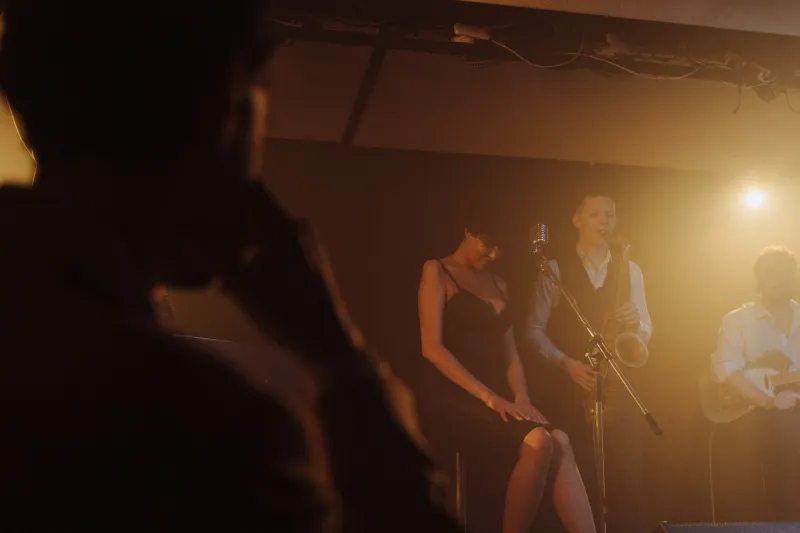
Not every resurrection happens on a festival stage. Some of the most significant career revivals in recent memory have originated in the intimate geography of a jazz club — a hundred seats, low lighting, and an audience close enough to see the fingers move across the keys. In these rooms, the absence of spectacle works in the artist's favor. There is nowhere to hide, and for a musician with genuine depth, nowhere to hide is exactly where the truth emerges.
The Village Vanguard in New York and the Jazz Showcase in Chicago have both witnessed evenings where a musician in their sixties or seventies delivered a performance so commanding that it generated more conversation than any album release that season. Recordings made from these nights — whether official live albums or audience-captured audio that circulates through collector networks — have a way of extending the moment far beyond the room itself, introducing the artist's work to listeners who were not present and may never have sought it out otherwise.
What the Audience Brings
It would be a mistake to attribute these moments entirely to the musician. The audience carries its own responsibility in the transaction. Jazz listeners who attend festivals and dedicated club nights tend to bring a quality of attention that is increasingly rare in contemporary entertainment culture. They are not passive recipients. They listen with accumulated knowledge, and when they recognize something exceptional — a phrase that lands with unusual conviction, a tempo choice that reframes the entire composition — their response is immediate and unmistakable.
That collective recognition functions as a form of authentication. When a room of experienced listeners rises to its feet for an artist who has been largely absent from the conversation, it sends a signal that reaches beyond the walls. Critics reconsider. Label representatives make notes. Bookers who had quietly moved on begin returning calls. The artist, for their part, often describes the experience in terms that go beyond professional renewal — something closer to the restoration of a fundamental relationship with the music itself.
The Role of Documentation
In earlier decades, the career-reviving performance was largely a matter of oral history. Word spread slowly, through reviews in Down Beat or Metronome, through conversations among musicians, through the gradual accumulation of reputation. Today, the documentation is instantaneous. A phone held aloft in a festival crowd captures a performance that reaches thousands of listeners before the artist has left the stage. A clip of an extraordinary piano solo circulates through jazz communities on social media platforms, drawing comments from listeners in cities the artist has not visited in years.
This acceleration has changed the nature of the resurrection. What once took months to register now takes days. The challenge, for the artist and for those around them, is converting that sudden visibility into something durable — new recordings, a booking schedule that reflects the renewed interest, and the kind of sustained critical engagement that transforms a viral moment into a genuine second chapter.
The Longer Arc
What these stories share, beneath their individual details, is a reminder of something the jazz world has always understood but occasionally needs to relearn: the music does not expire with fashion. An artist who developed their voice in the 1970s or 1980s does not become irrelevant simply because the industry's attention moved elsewhere. The voice remains. The command remains. What was missing was the opportunity — the stage, the room, the audience prepared to listen.
Jazz has always been a music of the present tense, of improvisation and immediacy, and yet it carries its history in every note. When a forgotten artist steps forward and delivers a performance that reminds an audience of what the music can do at its most concentrated and honest, they are not trading on nostalgia. They are demonstrating continuity — the unbroken thread that connects the music's past to its present and, through the listeners in those seats, to whatever comes next.
The halo, when it appears, belongs to the music as much as to the musician. And in jazz, it has a way of lasting.