Same Stage, Different Decades: How Jazz Is Uniting Generations Across America's Concert Halls
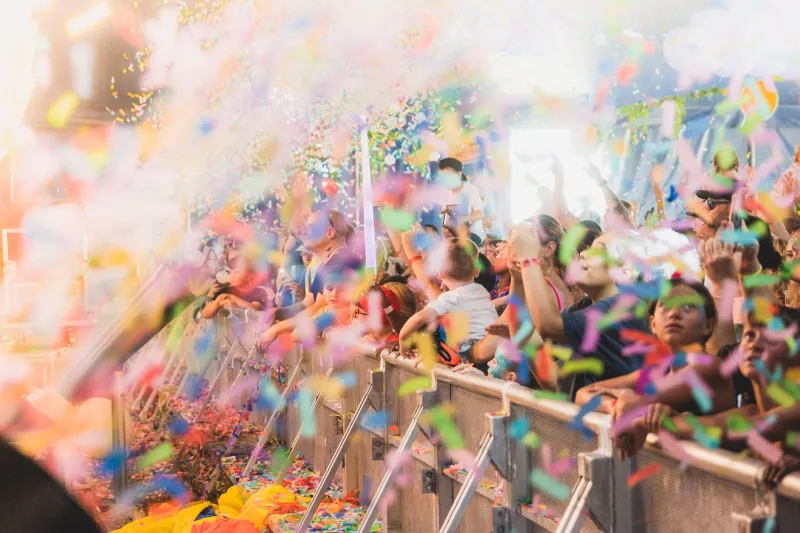
Something quietly remarkable is unfolding at jazz venues and festivals across the United States. At the Newport Jazz Festival last summer, a twenty-two-year-old from Brooklyn wearing headphones around her neck stood shoulder to shoulder with a sixty-eight-year-old retired schoolteacher from Ohio, both transfixed by the same piano trio on the main stage. Neither had sought out the other. Neither had expected to share the moment. Yet there they were — two people separated by nearly five decades, bound together by the same music.
This scene, repeated with increasing frequency at clubs, outdoor festivals, and concert halls from Chicago to New Orleans, signals something that promoters, musicians, and cultural observers are only beginning to fully appreciate: jazz, long presumed to be the exclusive domain of an aging audience, is quietly assembling one of the most intergenerationally diverse fan bases in contemporary American music.
The Stereotype That No Longer Holds
For at least two decades, the conventional wisdom inside the music industry was grim and largely unchallenged. Jazz was aging out. Its core audience was composed primarily of Baby Boomers and older listeners who had come of age during the music's commercial peak, and younger generations — raised on hip-hop, electronic music, and algorithmically curated playlists — were simply not interested. Venue operators worried. Record labels hedged their bets. Music journalists penned elegies.
The data, however, has begun to complicate that narrative in compelling ways. Streaming platforms report that listeners between the ages of eighteen and twenty-six now represent one of the fastest-growing demographics for jazz catalog consumption. Festivals that once skewed heavily toward older ticket buyers are documenting meaningful increases in younger attendance. And social media, particularly TikTok and YouTube, has introduced entire cohorts of young Americans to artists they might never have encountered through traditional channels.
The stereotype of jazz as music for the gray-haired and the nostalgic is not merely outdated — it may never have been as accurate as the industry assumed.
What Gen Z Hears That Others Missed
To understand why younger listeners are gravitating toward jazz, it helps to consider the sonic landscape they have grown up navigating. Gen Z came of age during the golden era of hip-hop production, a genre that has always worn its jazz influences openly. Producers like J Dilla, Madlib, and Karriem Riggins built careers sampling and interpolating jazz recordings, embedding the music's harmonic sophistication into tracks that reached millions of young ears without ever announcing themselves as jazz.
When those listeners eventually traced the samples back to their sources — to Miles Davis, to John Coltrane, to Herbie Hancock — many found themselves standing at the entrance to an enormous and largely uncharted world. Jazz did not feel foreign to them. It felt, in many cases, like coming home to something they had already been living inside without knowing it.
Beyond the hip-hop connection, there is a broader cultural appetite among younger Americans for music that rewards attention. In an era of sonic saturation, jazz's complexity — its improvisational spontaneity, its conversational interplay between musicians, its refusal to resolve every tension neatly — offers something that algorithmically optimized pop music rarely provides: genuine unpredictability. Each performance is, by its nature, unrepeatable. For a generation that has grown weary of content engineered for passive consumption, that quality carries real weight.
Musicians as Bridge Builders
The artists performing on today's stages are themselves increasingly aware of their role in this generational conversation. Younger jazz musicians — many of them in their twenties and thirties — have grown up fluent in both the tradition and the contemporary landscape. They do not experience the tension between honoring the canon and embracing the present as a contradiction. For them, it simply is not one.
Tenor saxophonist Immanuel Wilkins, bassist Linda May Han Oh, and pianist Cory Henry are among the artists whose work consistently draws listeners from across the age spectrum. Their music is rooted in the vocabulary of bebop and post-bop while reaching toward sounds and textures that feel entirely contemporary. When a Boomer who came up listening to Wayne Shorter hears Wilkins play, there is recognition. When a twenty-year-old who discovered jazz through a Kendrick Lamar deep cut hears the same performance, there is revelation. Both responses are authentic. Both are welcome.
Venue operators who have paid attention to this dynamic are beginning to design experiences that encourage rather than merely tolerate this kind of cross-generational encounter. At several clubs in cities including New York, Los Angeles, and Chicago, programming directors have deliberately sequenced sets to open with more accessible material before moving into deeper explorations — a structure that allows newer listeners to find their footing while giving longtime devotees something to anticipate.
The Festival as Meeting Ground
If the intimate club has long been jazz's spiritual home, the festival has become its most effective intergenerational gathering place. Events like the Chicago Jazz Festival, the Monterey Jazz Festival, and the Twin Cities Jazz Festival attract audiences whose age ranges would be remarkable in almost any other musical context. The open-air format, the communal atmosphere, and the sheer breadth of programming create conditions in which it feels entirely natural for a nineteen-year-old and a seventy-year-old to find themselves having an animated conversation about a set they both just witnessed.
Promoters at several major festivals have noted a deliberate shift in how they approach curation. Rather than programming exclusively to their existing base, many have begun booking younger artists with demonstrable social media followings alongside established headliners, reasoning that the two audiences will inevitably intermingle once they arrive. The strategy appears to be working. Anecdotal reports from festival staff consistently describe the same phenomenon: initial self-sorting by age at the outset of a day gives way, by evening, to something that looks much more like a genuinely mixed community.
What Endures, and Why It Matters
Jazz has survived economic upheaval, cultural displacement, and repeated declarations of its irrelevance. Its persistence is not accidental. The music carries within it a set of values — spontaneous creativity, deep listening, democratic conversation between performers — that resonate across time precisely because they address something fundamental in human experience rather than something merely fashionable.
The intergenerational convergence now visible at venues across America is not simply a marketing success story or a demographic curiosity. It is evidence that jazz continues to fulfill the function it has always served: gathering people together around something larger than any single generation's preferences or assumptions. The Boomer who first heard Kind of Blue on a college dorm turntable and the Gen Z listener who found it through a YouTube algorithm are arriving at the music from entirely different directions. What matters is that they are arriving — and that when they do, they tend to find each other waiting.
That, perhaps more than any chart position or streaming statistic, is the most compelling argument for jazz's continued vitality. The halo of this music, to borrow a phrase, has always been wide enough to hold more than one generation at a time. It is doing so again now, and the results are worth paying close attention to.